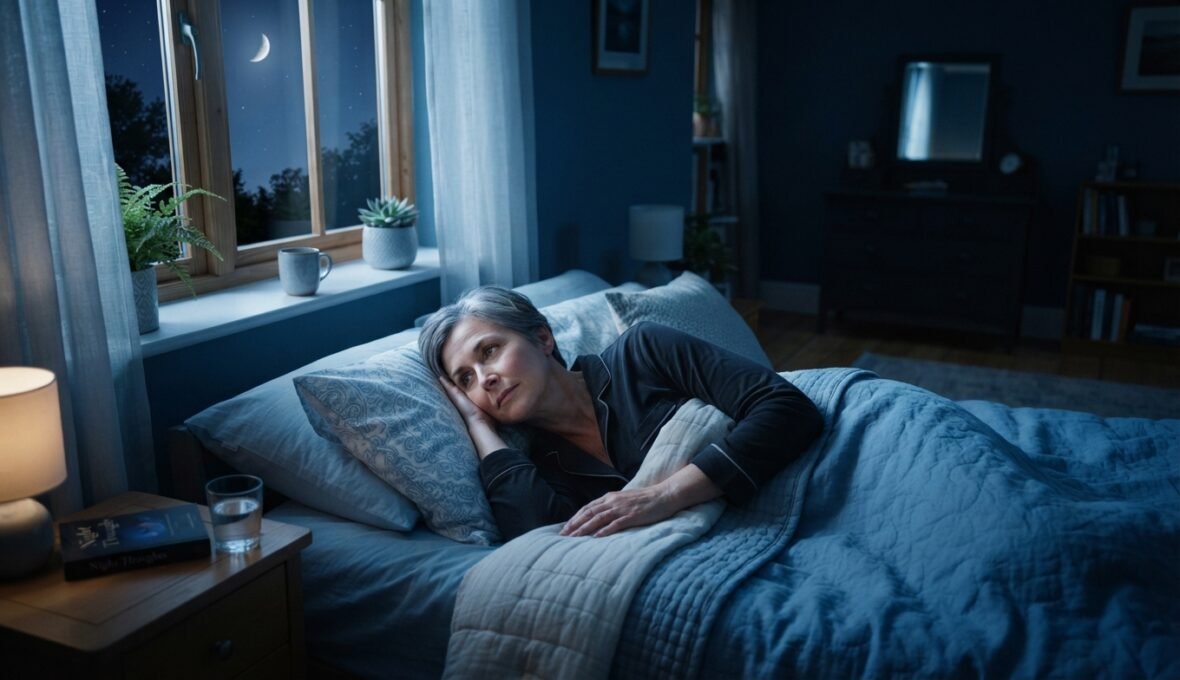
If you’ve ever found yourself wide awake at 3 a.m., convinced your knee, back, or shoulder is somehow worse than it was at noon, you’re not imagining it. Why pain feels worse at night after 50 comes down to a predictable, well-documented set of biological shifts, not simply “getting older” or being more sensitive to discomfort. Understanding what’s actually happening in your body at night is the first step toward doing something about it.
Your Body’s Internal Clock Turns Against You
Every function in your body runs on a roughly 24-hour cycle called the circadian rhythm, not just sleep, but hormone release, immune activity, and even how your nervous system processes pain signals. Researchers have found that pain sensitivity doesn’t stay constant throughout the day; it follows its own rhythm, often peaking in the early morning hours, around 4 a.m., according to laboratory studies on pain perception published in the journal Brain.
After 50, this internal clock often becomes less precise. Sleep architecture changes, the timing of hormone release shifts, and the body becomes less efficient at synchronizing all these overlapping cycles. The result is that the natural nighttime dip that used to pass unnoticed in your 30s or 40s now collides with joints, nerves, and muscles that have accumulated decades of wear.

The Cortisol Connection: Your Natural Anti-Inflammatory Runs Out
Cortisol is best known as the “stress hormone,” but it also happens to be one of the body’s most powerful natural anti-inflammatories. Cortisol follows a clear daily pattern: it peaks in the morning to help you get moving, then gradually declines, reaching its lowest point around midnight, according to Harvard Health Publishing.
This matters enormously for anyone with arthritis, tendinitis, or any inflammation-driven pain condition. During the day, cortisol quietly suppresses the release of pro-inflammatory cytokines, the molecules responsible for swelling, stiffness, and pain signaling.
When cortisol drops at night, that suppression fades, and inflammation is free to intensify. This is a major reason people with rheumatoid arthritis and osteoarthritis so often describe their joints as “angrier” after dark and why fibromyalgia patients frequently show a blunted cortisol rhythm that leaves them more exposed to nighttime pain flares.
Inflammation Doesn’t Sleep; In Fact, It Gets Busier
While cortisol is winding down, your immune system is doing the opposite. Research on circadian immunology shows that certain immune cells and inflammatory cytokines actually become more active during the later stages of sleep.
Your body uses nighttime hours for repair and maintenance, which is generally a good thing, but in a joint or tissue that’s already inflamed or damaged, this repair process can translate directly into more pain, swelling, and stiffness by morning.
This is also why many people over 50 notice their worst stiffness isn’t at 11 p.m. when they go to bed, but in the pre-dawn hours or right when they wake up; cortisol is at its lowest and inflammatory activity is at its peak at exactly that window.
Fewer Distractions Means More Attention on Pain
There’s also a neurological piece to this puzzle that has nothing to do with hormones. During the day, your brain is flooded with input: conversations, tasks, movement, noise, and screens. All of that competes for your attention, and pain signals, while still present, often get pushed to the background.
At night, that competition disappears. In a quiet, dark room, with nothing else demanding your brain’s attention, pain signals move to the foreground. This isn’t “all in your head” in the dismissive sense; it’s a well-established feature of how the nervous system prioritizes sensory information.
Add pre-sleep anxiety about not being able to sleep because of pain, and you get a feedback loop: pain disrupts sleep, poor sleep lowers your pain threshold the next day, and the cycle repeats.
Lying Still Changes How Your Body Feels Pain
Movement keeps joints lubricated and muscles loose. Lying still for six, seven, or eight hours does the opposite. Reduced circulation and hours without weight-bearing movement allow joints, especially the hips, knees, and lower back, to stiffen. For many people over 50, this stiffness is barely noticeable at 9 p.m., builds steadily through the night, and becomes obvious the moment they try to get up in the morning or shift position at 2 a.m.
Sleep position adds another layer. A mattress or pillow that no longer supports the spine and joints the way it once did can quietly amplify pressure points over the course of the night, turning mild discomfort into a genuine flare-up by morning.
Read also – you might like this content
Carpal Tunnel Syndrome vs. Arthritis: How to Tell the Difference
Shoulder Pain When Reaching Overhead: Causes and Fixes
What Actually Helps: Evidence-Based Strategies
The good news is that because these mechanisms are well understood, there are concrete, non-fabricated strategies that address each one:
- Time your movement. Gentle stretching or a short walk in the early evening helps counteract the stiffness that builds from inactivity overnight.
- Support cortisol’s natural rhythm. Consistent sleep and wake times help stabilize the hormonal cycles that regulate inflammation.
- Address inflammation proactively, not just reactively—talk with your doctor about whether your current pain management plan accounts for its nighttime dip in effectiveness, since medication that works well at noon may wear off exactly when cortisol drops.
- Reduce the “spotlight effect.” A wind-down routine—dim lighting, no screens, calming audio—can reduce the anxious hyperfocus on pain that keeps many people awake.
- Reassess your sleep surface. A mattress or pillow that no longer matches your body’s support needs after 50 is one of the most overlooked contributors to nighttime pain.
Why Pain Feels Worse at Night After 50: When to See a Doctor
Occasional nighttime discomfort is common after 50, but you should talk to a healthcare provider if nighttime pain is new, rapidly worsening, accompanied by swelling, fever, or numbness, or if it’s consistently preventing you from sleeping more than a few hours a night. These can be signs of a condition that needs targeted treatment rather than general sleep hygiene fixes.

Frequently Asked Questions
Why does arthritis pain get worse specifically at night?
Arthritis is largely inflammation-driven, and inflammation increases as cortisol, the body’s natural anti-inflammatory hormone, drops to its lowest levels overnight, allowing swelling and joint pain to intensify.
Is it normal for pain to peak in the early morning hours?
Yes. Laboratory research on pain perception has identified around 4 a.m. as a common peak point, driven by the overlap of low cortisol, active inflammatory processes, and the body’s circadian pain rhythm.
Can changing my mattress really reduce nighttime pain after 50?
It can help significantly for pressure-related pain, since an unsupportive surface amplifies stress on joints and the spine over many hours of stillness, though it won’t address hormonal or inflammatory causes on its own.
Does anxiety make nighttime pain worse?
Yes. Reduced distraction at night allows more cognitive attention to focus on pain signals, and anxiety about pain or poor sleep can amplify this effect, creating a cycle of worsening sleep and worsening pain perception.
Bringing It All Together
Why Pain Feels Worse at Night After 50. Nighttime pain after 50 isn’t a mystery, and it isn’t a sign that you’re simply more fragile than you used to be. It’s the predictable result of your circadian rhythm, a natural dip in cortisol, increased overnight inflammatory activity, reduced distraction, and hours of stillness all converging at once.
Once you understand the “why,” the “what to do about it” becomes far more actionable, from timing gentle movement and reassessing your sleep surface to having a more informed conversation with your doctor about how your pain management plan holds up overnight.
If nighttime pain has been disrupting your sleep, start with one change this week, whether that’s an evening stretch routine or finally addressing that unsupportive mattress, and give your body the chance to break the cycle.
This article is for informational purposes only and is not a substitute for professional medical advice, diagnosis, or treatment. Always consult a qualified healthcare provider regarding any medical condition or before starting a new treatment or exercise routine.

Lauren is the founder of PainFreeAfter50.com and a dedicated researcher in joint health and healthy aging. After developing chronic joint pain in her early 50s, she spent years reviewing clinical studies and testing natural approaches to find real solutions. Today she shares honest, evidence-based guidance to help adults over 50 manage pain, improve mobility, and reclaim their quality of life.