
If you’ve ever felt your legs go numb, heavy, or tingly after a short walk, you’re not imagining it. This is one of the most common complaints we hear from readers over 50, and it often points to a condition called spinal stenosis.
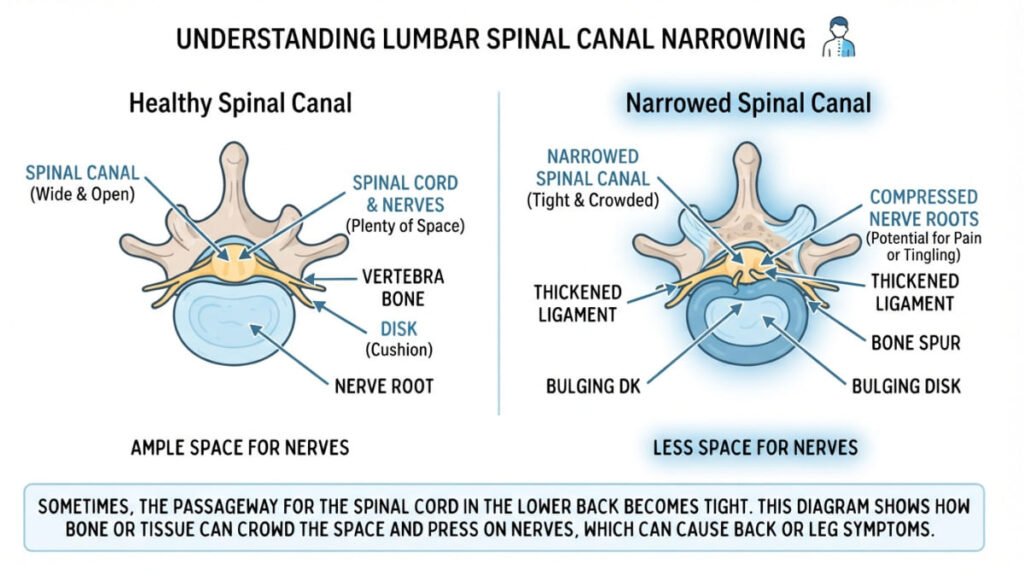
Spinal Stenosis Explained Simply: it’s a narrowing of the spaces in your spine that puts pressure on the nerves running down to your legs.
The good news is that this condition is well understood, widely studied, and very manageable once you know what’s happening. Let’s walk through what causes it, what the research shows, and what steps can help you move more comfortably again.
What Science Says About Spinal Stenosis
Spinal Stenosis Explained. Spinal stenosis happens when the spaces inside your backbone narrow over time. This narrowing puts pressure on the nerves that travel from your lower back into your legs.
Doctors call the leg symptoms that result “neurogenic claudication,” which is really just a medical term for nerve-related pain, numbness, or weakness triggered by standing or walking.
Research published through the National Institutes of Health explains that these symptoms happen because standing upright and walking naturally narrow the spinal canal even further. When you bend forward, sit down, or lean on something like a shopping cart, the canal opens back up slightly, which is why relief often comes quickly when you change position.
Mayo Clinic notes that spinal stenosis is especially common in adults over 50, largely because of age-related changes like thickened ligaments, bone spurs, and worn-down discs. It’s considered one of the leading reasons older adults develop difficulty walking long distances.
One important detail from clinical research: neurogenic claudication is different from vascular claudication, which is caused by poor blood flow rather than nerve compression. Vascular leg pain tends to ease quickly once you stop walking, even if you’re still standing.
Nerve-related pain from stenosis usually needs you to sit or bend forward before it eases. Knowing this difference can help you describe your symptoms more accurately to your doctor.
Read this post too—you might like it.: Carpal Tunnel Syndrome vs. Arthritis: How to Tell the Difference

What This Feels Like: Practical Insights From Everyday Experience
Based on common experiences among adults over 50, spinal stenosis symptoms tend to follow a pattern that can be frustrating until you understand it.
Spinal Stenosis Explained. Many of our readers report that their legs feel fine first thing in the morning or while sitting, but symptoms creep in after walking through a grocery store or standing at the kitchen counter. The numbness or heaviness often starts in the buttocks or thighs and spreads downward.
A few patterns readers describe again and again:
- Symptoms usually affect both legs, not just one
- Walking uphill can feel easier than walking downhill or on flat ground
- Leaning on a cart, walker, or countertop often brings quick relief
- Sitting down, even briefly, tends to reset things
- Symptoms can worsen gradually over months or years rather than appearing overnight
It’s worth noting that not every case of leg numbness comes from spinal stenosis. Diabetes, circulation problems, and other nerve conditions can cause similar symptoms. This is exactly why a proper evaluation matters instead of guessing at home.
Practical Steps That Can Help You Manage Symptoms
While spinal stenosis is a structural change in the spine, there’s a lot you can do day to day to reduce discomfort and stay active.
Adjust your walking posture. Leaning slightly forward, using a walking stick, or pushing a cart can open up space in the spinal canal and ease pressure on the nerves.
Break up long periods of standing or walking. Short, frequent walks with seated breaks are often more comfortable than one long walk.
Try gentle flexion-based movement. Activities like stationary biking or recumbent cycling are often easier than walking, since the bent-forward position reduces nerve pressure.
Strengthen your core and hips. A stronger midsection helps support your spine and can reduce strain during daily movement. A physical therapist can design a routine suited to your specific stenosis pattern.
Watch your footwear. Supportive, cushioned shoes can reduce jarring impact that may aggravate symptoms.
Track your patterns. Keeping a simple note of how far you can walk before symptoms start, and what helps them ease, gives your doctor useful information for diagnosis and treatment planning.
None of these steps replace a medical diagnosis, but they can make daily life noticeably more comfortable while you explore treatment options with your healthcare provider.
What Experts Recommend
Clinical guidelines generally recommend starting with conservative, non-surgical treatment before considering more invasive options. According to guidance summarized by Harvard Health, first-line approaches typically include:
- Physical therapy focused on flexion-based exercises and core strengthening
- Anti-inflammatory medication, used under a doctor’s guidance, to manage pain during flare-ups
- Epidural steroid injections, which can reduce inflammation around compressed nerves for some patients
- Activity modification, such as favoring flexed postures during exercise
Diagnosis typically starts with a physical exam and a review of your symptom pattern, followed by an MRI to confirm the narrowing and rule out other causes. Research published in JAMA and related orthopedic literature emphasizes that imaging alone doesn’t tell the whole story.
Some people with visible narrowing on a scan have no symptoms at all, which is why doctors weigh your reported experience alongside the imaging.
Relief or surgery, such as a laminectomy to remove part of the bone or ligament causing compression, is generally reserved for cases where conservative treatment hasn’t provided enough relief or when symptoms significantly limit daily function.
Experts also stress ruling out vascular causes first, particularly for readers with diabetes or a history of circulation problems, since the symptoms can look similar but need different treatment.
If you ever experience sudden loss of bladder or bowel control alongside leg weakness, this is considered a medical emergency and requires immediate care.
Conclusion: Spinal Stenosis Explained comes down to this: it’s a narrowing in your spine that puts pressure on nerves, and it’s a very common reason legs go numb or heavy during walking after 50. The pattern of symptoms easing with sitting or bending forward is a helpful clue, but only a doctor can confirm the diagnosis and rule out other causes.
With the right combination of physical therapy, posture adjustments, and medical guidance, many people continue walking and staying active for years after diagnosis. If leg numbness during walking sounds familiar, consider bringing this article to your next doctor’s appointment as a starting point for the conversation.
Medical Disclaimer
This article is for educational purposes only and is not intended as medical advice. It should not be used to diagnose or treat any health condition. Always consult a qualified healthcare provider regarding any symptoms, diagnosis, or treatment plan. This post may contain affiliate links, and we may earn a commission at no additional cost to you if you choose to purchase through them.

Lauren is the founder of PainFreeAfter50.com and a dedicated researcher in joint health and healthy aging. After developing chronic joint pain in her early 50s, she spent years reviewing clinical studies and testing natural approaches to find real solutions. Today she shares honest, evidence-based guidance to help adults over 50 manage pain, improve mobility, and reclaim their quality of life.