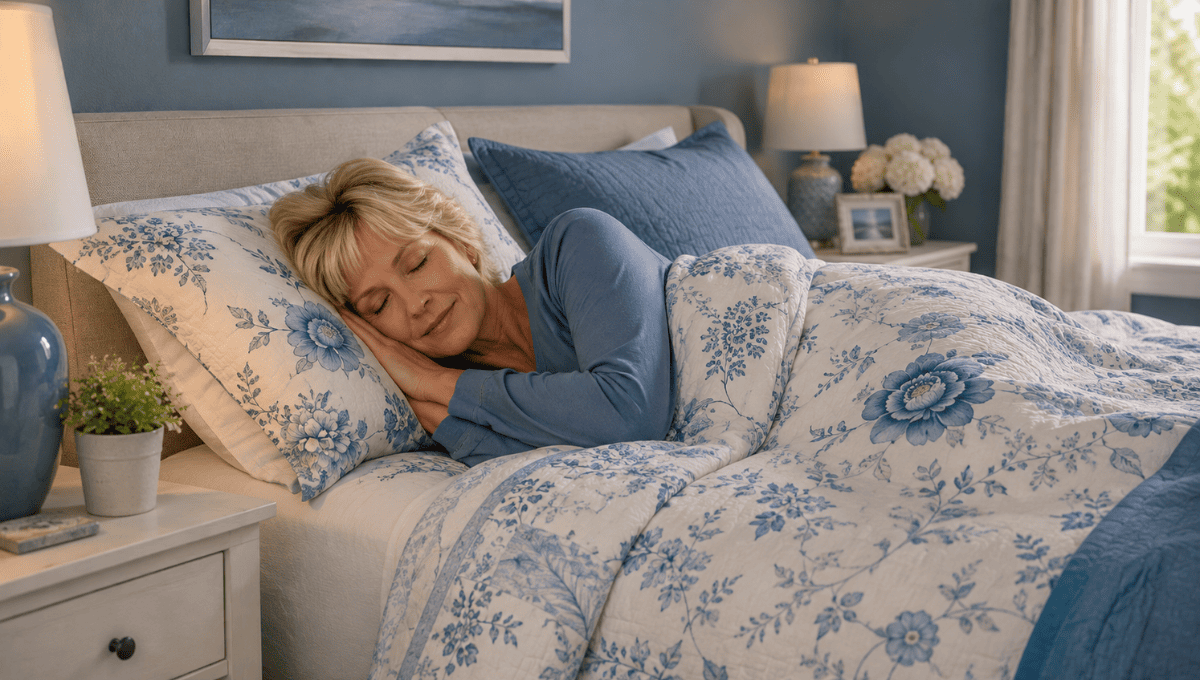
If you’ve noticed your back feels stiffer getting out of bed than it did a decade ago, you’re not imagining it. Finding the best mattresses for back pain after 50 becomes more important as spinal discs lose some of their cushioning and muscles take longer to recover from a poor night’s sleep.
The mattress you sleep on every night can either support that recovery or quietly work against it, and the right choice often comes down to firmness, material, and how well the surface keeps your spine aligned through the night.
What Changes in Your Back After 50
As we age, the discs between our vertebrae naturally lose water content and elasticity, which can reduce their ability to cushion movement. Joint stiffness, decreased muscle mass, and years of everyday wear can all make the spine more sensitive to pressure and poor alignment.
According to the Mayo Clinic, most back pain comes from muscle strains or sprains rather than a serious structural issue, but posture and support during sleep still play a meaningful role in how quickly discomfort resolves.
This is exactly why mattress choice matters more with age. A worn-out or poorly matched mattress can leave gaps beneath the lower back, force the spine out of its natural curve, or create pressure points at the hips and shoulders. Over a third of your life is spent lying down, so even small misalignments repeated night after night can add up to real discomfort.
Best Mattresses for Back Pain After 50: What the Research Actually Shows
For decades, the common advice was simple: if your back hurts, get the firmest mattress you can find. That advice hasn’t held up well under scrutiny.
A widely cited study published in The Lancet followed over 300 people with chronic lower-back pain, assigning half to a firm mattress and half to a medium-firmness one. Patients on the medium mattress reported significantly greater improvement, with roughly 82 percent noting relief compared to about 68 percent in the firm-mattress group.
A more recent 2021 review of dozens of studies reached a similar conclusion: medium-firm mattresses tend to improve sleep quality and reduce the risk of developing low back pain compared to mattresses that are too soft or too hard. The takeaway for anyone shopping for the best mattresses for back pain after 50 is that “firm” is not automatically “better.”
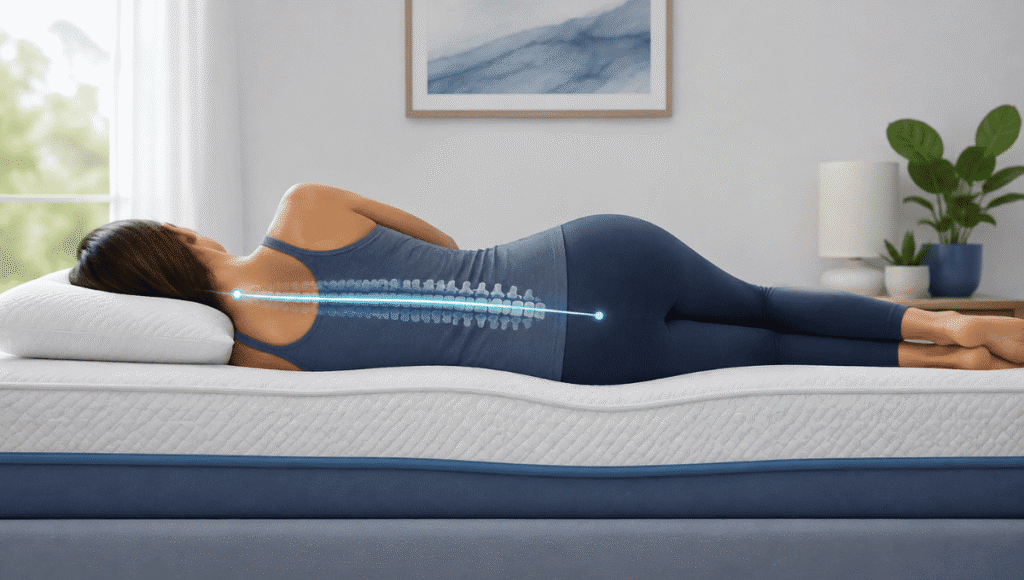
A mattress that’s too hard can push against the hips and shoulders, causing the spine to bow unnaturally, while one that’s too soft can let the midsection sink and pull the lower back out of alignment.
The Mayo Clinic has specifically addressed this as a common myth, noting that a firm mattress is not universally the best choice for back pain and that the ideal firmness genuinely varies from person to person. That’s an important nuance: while medium-firm is a solid starting point for most people over 50, body type, weight, and preferred sleep position all shape what will actually feel supportive.
Firmness Isn’t One-Size-Fits-All
Mattress firmness is often rated on a soft-to-firm scale, and most experts recommend landing in the medium to medium-firm range for general back support. But a few personal factors shift that recommendation:
Body weight: Heavier individuals may need a firmer mattress or one with more supportive coils to prevent excessive sinking, while lighter individuals may find a softer surface more comfortable without losing support.
Hip and shoulder width: Wider hips often benefit from a bit more give in the mattress to keep the spine level, while narrower hips may do better with firmer support.
Existing joint pain: If arthritis affects the hips or shoulders, a slightly softer top layer can reduce pressure at these points while a supportive base layer maintains spinal alignment.
Because these factors vary so much, trial and error, along with a generous in-home trial period, is often the most reliable way to find the right fit.
Mattress Types Worth Considering
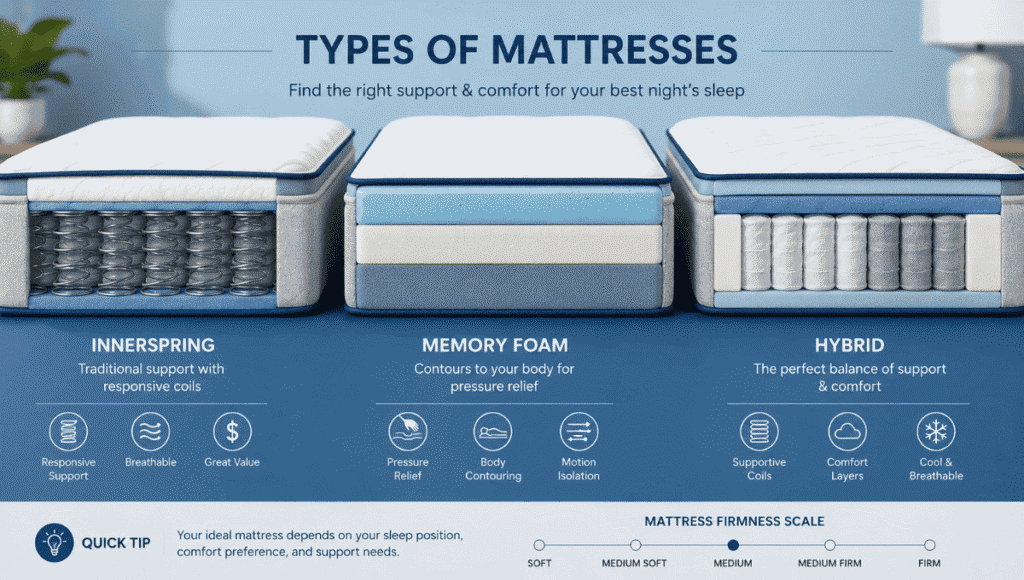
Memory foam: Contours closely to the body and distributes weight evenly, which can relieve pressure points at the hips and shoulders. Some memory foam mattresses retain heat, so look for models with cooling gel or breathable covers if night sweats are a concern, which is common during and after menopause.
Hybrid mattresses: Combine coils for support with a foam or latex comfort layer on top. This combination often gives the structured support of an innerspring mattress with some of the pressure relief of foam, making hybrids a popular middle ground for people over 50.
Latex mattresses: Naturally responsive and slightly bouncier than memory foam, latex offers good support with less of the “sinking in” feeling. It also tends to sleep cooler and last longer than traditional foam.
Innerspring mattresses: The most traditional option, offering firm, consistent support, though they may lack the pressure-relieving contouring that foam or hybrid models provide.
There isn’t a single “best” material for everyone. What matters most is whether the mattress keeps your spine in a neutral position, regardless of which category it falls into.
How Sleep Position Affects What You Need
Your preferred sleep position changes what kind of support your back actually needs:
Back sleepers generally do well with a medium-firm mattress that supports the natural curve of the lower back and pelvis without letting the hips sink too deeply.
Side sleepers usually benefit from a slightly softer surface that cushions the shoulders and hips while keeping the spine level from neck to tailbone.
Stomach sleepers, though this position is generally discouraged for back health, tend to need a firmer surface to prevent the midsection from sinking, which can strain the lower back.
The Mayo Clinic notes that certain sleeping positions, particularly on the back or side with proper support, tend to reduce back pain compared to stomach sleeping, which can hyperextend the lower spine.
Read also; you might like the content. : Why Your Pillow Might Be the Real Reason You’re Waking Up in Pain After 50
Signs Your Mattress Might Be Part of the Problem
It isn’t always obvious that a mattress is contributing to back pain, but a few signs are worth paying attention to:
Waking up with stiffness that improves within 20 to 30 minutes of moving around
Visible sagging, lumps, or indentations in the mattress surface
Feeling more comfortable in a hotel bed or after sleeping somewhere else
A mattress that’s more than seven to ten years old, which is the general lifespan range most manufacturers and sleep specialists recommend before materials break down and lose support
If several of these apply, it may be time to start shopping for one of the best mattresses for back pain after 50 rather than continuing to push through discomfort on a worn-out bed.
Tips for Testing a New Mattress
Take advantage of trial periods. Many mattress companies offer 90 to 100 night trials, which gives your body enough time to adjust and reveals whether a mattress truly supports your spine over time, not just during a five-minute showroom test.
Lie down in your actual sleep position for several minutes rather than just sitting on the edge of the bed. Pay attention to pressure points at the shoulders, hips, and lower back rather than overall “softness.”
Consider pairing a new mattress with a supportive pillow that keeps your neck aligned with your spine, since neck position affects lower back posture as well.
When to See a Doctor
A new mattress can meaningfully improve mild to moderate back discomfort, but it isn’t a substitute for medical care. According to the Mayo Clinic, you should seek prompt medical evaluation if back pain intensifies at night or when lying down, spreads down one or both legs, causes numbness, tingling, or weakness, or occurs alongside new bowel or bladder problems.
These symptoms may point to something beyond simple muscle strain and deserve a professional assessment rather than a mattress swap.
The Bottom Line
There is no single mattress that works for everyone, but current research points fairly consistently toward medium-firm support as the best general starting point for people managing back pain after 50.
From there, personal factors like body weight, sleep position, and any existing joint issues should guide the final decision. Taking the time to test a mattress properly, rather than assuming firmer is automatically better, can make a real difference in how you feel each morning.
This article is for informational purposes only and is not a substitute for professional medical advice, diagnosis, or treatment. Always consult your doctor or a qualified healthcare provider regarding any back pain or health concerns.

Lauren is the founder of PainFreeAfter50.com and a dedicated researcher in joint health and healthy aging. After developing chronic joint pain in her early 50s, she spent years reviewing clinical studies and testing natural approaches to find real solutions. Today she shares honest, evidence-based guidance to help adults over 50 manage pain, improve mobility, and reclaim their quality of life.