
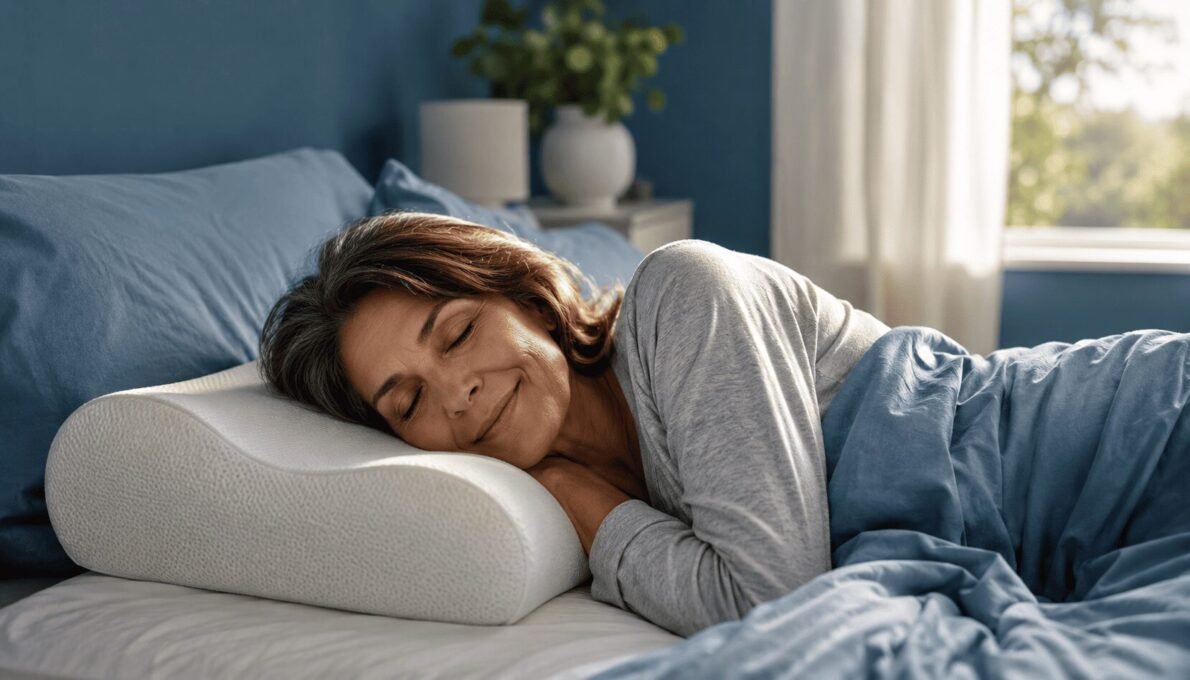
Best pillow for neck pain after 50. If you’re over 50 and you’ve started waking up stiff, achy, or with a nagging pain in your neck or shoulder that wasn’t there a decade ago, you’re not imagining it. And it might not be your mattress. It could be your pillow.
Why sleep gets harder on your neck as you age
As we get older, the muscles and joints around our neck and shoulders lose some of their flexibility and cushioning. A pillow that worked fine in your 30s can leave your spine out of alignment in your 50s and 60s, and that misalignment adds up night after night.
According to Mayo Clinic, keeping your neck in line with your chest and back while you sleep is one of the simplest ways to reduce strain and pain. A physical therapy resource on sleep and neck pain notes that back sleeping with proper cervical support, or side sleeping with pillow height matched to the space between your ear and shoulder, keeps the spine neutral and cuts down on nighttime strain.
Cleveland Clinic adds a practical tip: your pillow should be thick enough to support your head and neck without letting it droop. Too flat, and your neck sags. Too high, and it gets pushed out of alignment the other way.
Mayo Clinic’s own patient community backs this up in a more personal way. People managing chronic neck and shoulder pain often describe years of trial and error with pillow height, shape, and firmness before finding something that actually helped them sleep through the night.
Best Sleeping Positions for Lower Back Pain: Sleep Better and Wake Up With Less Pain
best pillow for neck pain after 50: What to look for in a pillow after 50
Based on the research above, a few things matter most for anyone dealing with age-related neck or shoulder discomfort:
- Contoured support that follows the natural curve of your neck instead of leaving gaps
- A shape that adapts to how you actually sleep, whether that’s on your back, your side, or a mix of both through the night
- Firm enough support so your head doesn’t sink too far, but soft enough that it doesn’t create new pressure points
- Breathable material, since overheating is its own sleep disruptor at this age
Where ArcaPillow fits in
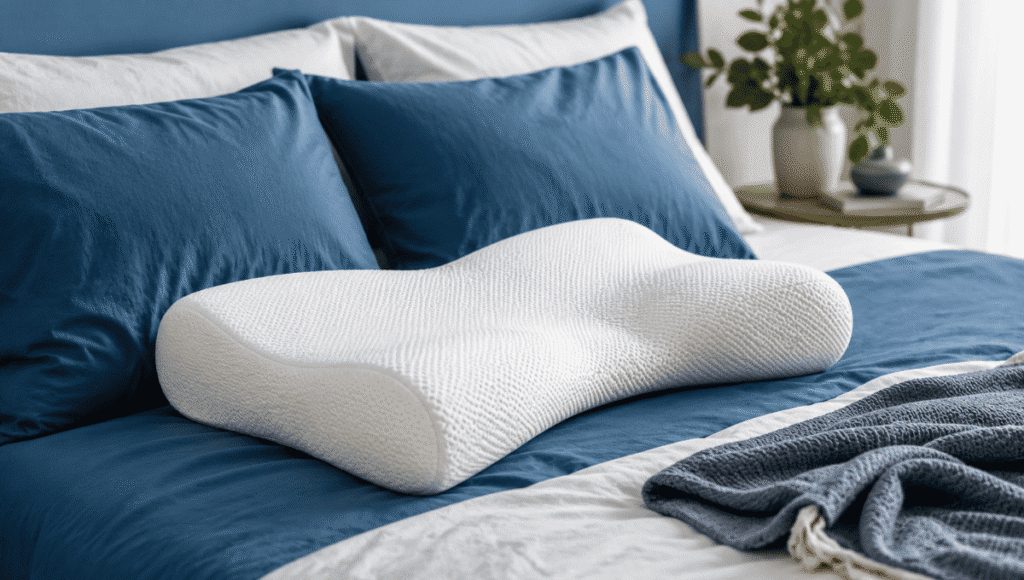
This is the kind of pillow I’ve been testing and recommending to readers who’ve written in about neck pain: the ArcaPillow. It uses a contoured, butterfly-style memory foam shape designed to cradle the neck and support spinal alignment, whether you’re a back sleeper, side sleeper, or switch positions throughout the night.
The memory foam adjusts to your shape instead of forcing your neck into one fixed position, and the cover is breathable and removable for easy washing.
It’s not a medical device and it won’t cure a chronic condition on its own, but as a support tool alongside the sleep positioning habits above, it’s a low-effort change that can make a real difference. It ships with a 30-day money-back guarantee, so there’s room to try it without much risk.
A few honest caveats
- ArcaPillow is not FDA-cleared or FDA-approved, and it’s not intended to diagnose, treat, cure, or prevent any medical condition.
- If you switch from a flat pillow to a contoured one, it can feel unusual for the first few nights while your neck adjusts.
- If you have a diagnosed neck or spine condition, talk to your doctor or physical therapist before changing your sleep setup.
- This post contains an affiliate link. If you purchase through it, I may earn a small commission at no extra cost to you.
Frequently Asked Questions
Can a pillow really fix neck pain?
A supportive pillow won’t fix an underlying medical issue, but poor pillow support is a common contributor to daily neck stiffness, and switching to one that keeps your spine aligned can meaningfully reduce discomfort for many people.
What’s the best sleep position for neck pain after 50?
Research points to back sleeping with proper neck support, or side sleeping with a pillow height that matches the distance from your ear to your shoulder, as the two positions least likely to strain your neck overnight.
How long does it take to adjust to a new pillow?
Most people need a few nights to a week to get used to a new pillow shape, especially if you’re moving from a flat pillow to a contoured one.
Disclaimer: This article is for informational purposes only and is not a substitute for professional medical advice. Consult your doctor before making changes to your sleep routine if you have an existing health condition.

Lauren is the founder of PainFreeAfter50.com and a dedicated researcher in joint health and healthy aging. After developing chronic joint pain in her early 50s, she spent years reviewing clinical studies and testing natural approaches to find real solutions. Today she shares honest, evidence-based guidance to help adults over 50 manage pain, improve mobility, and reclaim their quality of life.



2 thoughts on “Why Your Pillow Might Be the Real Reason You’re Waking Up in Pain After 50”