
Best Sleeping Positions for Lower Back Pain. Getting a good night’s sleep can feel impossible when your lower back hurts. If you’re constantly waking up stiff, sore, or struggling to find a comfortable position, you’re not alone. The Best Sleeping Positions for Lower Back Pain can make a significant difference in how you feel each morning, especially for adults over 50, when age-related changes in the spine become more common.
Based on common experiences among adults over 50, many of our readers report that simply changing their sleeping posture, using the right pillow, or supporting their knees has helped reduce morning pain. While sleeping position isn’t a cure for back problems, it can reduce stress on the spine and improve overall sleep quality.
In this guide, we’ll explain what science says, which positions work best, which ones to avoid, and simple strategies that can help you wake up feeling more refreshed.
What Science Says About the Best Sleeping Positions for Lower Back Pain
Sleep plays an essential role in allowing muscles, joints, and spinal tissues to recover. Poor sleep posture, however, can place unnecessary pressure on the lumbar spine (lower back), making pain worse.
According to Harvard Health Publishing, maintaining the natural curve of the spine while sleeping helps reduce muscle tension and pressure on spinal structures.
The Mayo Clinic also recommends keeping the spine aligned during sleep and using pillows strategically to support the body’s natural position.
Research supported by the National Institutes of Health (NIH) suggests that sleep quality and chronic pain are closely connected. Poor sleep may increase pain sensitivity, while chronic pain can make sleeping more difficult, creating a cycle that’s hard to break.
Although there isn’t one perfect sleeping position for everyone, expert consensus agrees that maintaining spinal alignment is one of the most effective ways to reduce lower back discomfort.
Best Sleeping Positions for Lower Back Pain
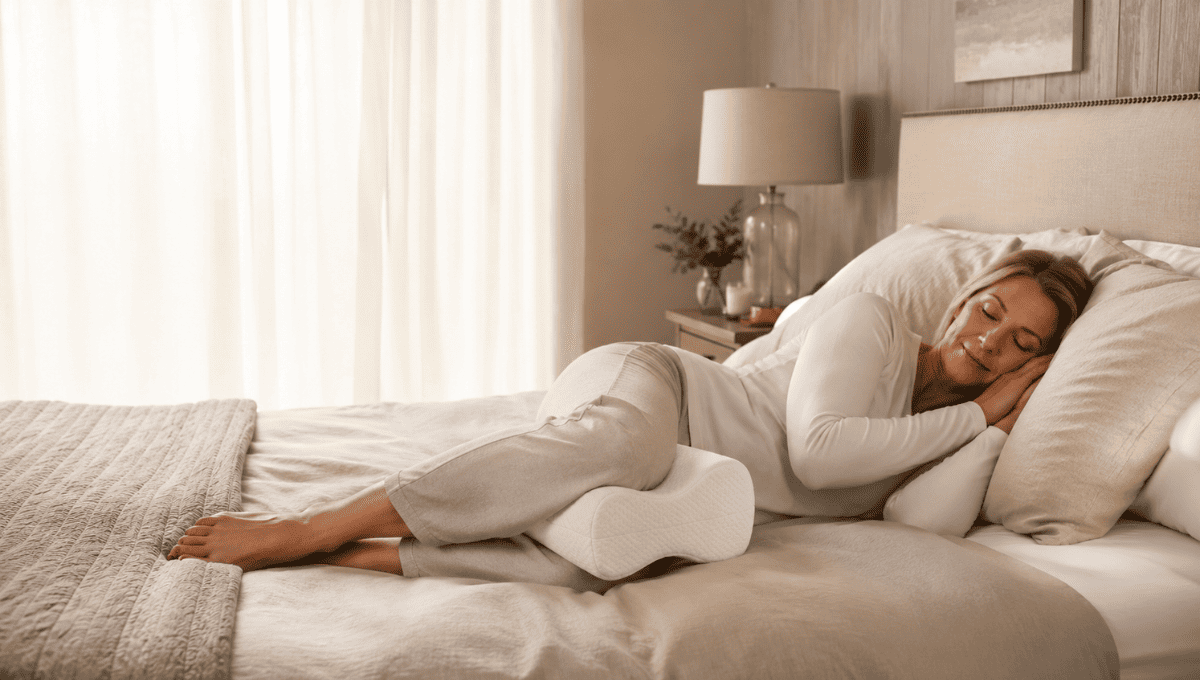
1. Sleeping on Your Side With a Pillow Between Your Knees
This is one of the most commonly recommended positions by spine specialists. Placing a firm pillow between your knees helps keep your hips, pelvis, and spine aligned. This reduces twisting of the lower back during the night. Many of our readers report that this simple adjustment noticeably reduces morning stiffness after just a few nights.
Benefits include:
- Better spinal alignment
- Reduced pressure on the hips
- Less strain on lower back muscles
- Improved comfort throughout the night
2. Sleeping on Your Back With a Pillow Under Your Knees
For many people, sleeping on the back evenly distributes body weight across the mattress. Adding a pillow under your knees slightly bends the hips, helping maintain the natural curve of the lower spine. This position may be particularly comfortable for people with:
- Degenerative disc disease
- Muscle strain
- Arthritis-related back pain
If you sleep on your back, choose a pillow that supports your neck without pushing your head too far forward.

3. Fetal Position (Modified)
If you have spinal stenosis or certain degenerative conditions, gently curling into a loose fetal position may help create more space between the vertebrae. Avoid curling too tightly, which can strain the neck and hips.
Instead:
- Keep knees slightly bent
- Relax your shoulders
- Keep your spine relatively straight
This position often works well for older adults who naturally find side sleeping more comfortable.
4. Reclined Sleeping Position
Some people with degenerative spinal conditions find relief by sleeping in a slightly elevated position. An adjustable bed, or a wedge pillow, can reduce pressure on the lumbar spine. This position may also help people who experience both:
- Lower back pain
- Acid reflux
Sleeping Positions That May Make Lower Back Pain Worse
Not every sleeping position supports healthy spinal alignment.
Sleeping on Your Stomach
Most experts agree this is the least favorable position for lower back pain. Stomach sleeping often:
- Flattens the natural spinal curve
- Twists the neck
- Increases pressure on lower back muscles
If you cannot stop sleeping on your stomach, placing a thin pillow under your hips may reduce some of the strain.
Sciatica After 50: Symptoms, Causes, and Relief That Actually Works
Sleeping Without Proper Pillow Support
Even if your body position is good, poor pillow support can throw your entire spine out of alignment. Your head should remain level with your shoulders, not tilted too high or too low.
Additional Tips to Improve Sleep With Lower Back Pain
Finding the Best Sleeping Positions for Lower Back Pain works even better when combined with healthy sleep habits.
Choose the Right Mattress
The ideal mattress is usually medium-firm. According to research frequently referenced by spine specialists, medium-firm mattresses tend to provide better spinal support than extremely soft ones.
A mattress that’s too soft allows the hips to sink. A mattress that’s too firm may create pressure points on the shoulders and hips.
Stretch Before Bed
Gentle stretching for 5–10 minutes may relax tight muscles. Simple stretches include:
- Knee-to-chest stretch
- Cat-Cow stretch
- Child’s Pose
- Pelvic tilts
Avoid aggressive stretching if it increases pain.
Stay Physically Active
Regular movement helps strengthen muscles that support the spine. Walking, swimming, and low-impact strength exercises are often recommended for adults over 50.
Maintain a Healthy Weight
Excess body weight places additional stress on the lumbar spine. Even modest weight loss can reduce chronic lower back discomfort for some individuals.
Practice Good Sleep Hygiene
Good sleep isn’t only about position.
Try to:
- Go to bed at the same time every night.
- Limit screen time before bed.
- Keep your bedroom cool and dark.
- Avoid large meals close to bedtime.
What Experts Recommend
Leading health organizations consistently emphasize that no single sleeping position works for everyone. Experts from the Mayo Clinic, Harvard Health Publishing, and the NIH generally recommend:
- Keep your spine in a neutral position.
- Use pillows to support natural alignment.
- Replace worn-out mattresses when necessary.
- Stay physically active during the day.
- Seek medical evaluation if pain persists for several weeks or is accompanied by numbness, weakness, or loss of bladder or bowel control.
Based on common experiences among adults over 50, small adjustments often produce meaningful improvements over time. Many of our readers report sleeping better after combining proper positioning with regular stretching and improved mattress support.
Frequently Asked Questions
What is the best sleeping position for lower back pain and sciatica?
Sleeping on your side with a pillow between your knees is often recommended because it helps keep the spine aligned and may reduce pressure on the sciatic nerve.
Is sleeping on your back good for lower back pain?
Yes. Sleeping on your back with a pillow placed under your knees can help maintain the natural curve of the lower spine and reduce muscle strain.
What type of mattress is best for lower back pain?
Most experts recommend a medium-firm mattress that supports spinal alignment without creating excessive pressure on the hips and shoulders.
What type of mattress is best for lower back pain?
Most experts recommend a medium-firm mattress that supports spinal alignment without creating excessive pressure on the hips and shoulders.
Can changing my sleeping position really reduce lower back pain?
For many people, yes. While it may not eliminate the underlying cause, improving sleep posture can reduce stress on the spine, decrease morning stiffness, and improve overall sleep quality.
Conclusion. Finding the Best Sleeping Positions for Lower Back Pain doesn’t require expensive treatments or complicated routines. Small changessuch as sleeping on your side with a pillow between your knees, supporting your legs while sleeping on your back, choosing the right mattress, and practicing healthy sleep habits, can significantly improve comfort.
Although every person’s body is different, maintaining proper spinal alignment remains one of the most effective ways to reduce nighttime discomfort.
If your pain is severe, persistent, or accompanied by numbness, weakness, or other concerning symptoms, consult a healthcare professional for a proper evaluation.
Better sleep often begins with better support, and making a few simple adjustments tonight could help you wake up feeling better tomorrow.
Medical Disclaimer
This article is for educational purposes only and should not be considered medical advice. Always consult your physician or another qualified healthcare provider before starting any new treatment or making significant changes to your sleep habits, especially if you have chronic back pain or other medical conditions. Some links on this site may be affiliate links. If you make a purchase through these links, we may earn a small commission at no additional cost to you. This helps support our content while maintaining editorial independence.

Lauren is the founder of PainFreeAfter50.com and a dedicated researcher in joint health and healthy aging. After developing chronic joint pain in her early 50s, she spent years reviewing clinical studies and testing natural approaches to find real solutions. Today she shares honest, evidence-based guidance to help adults over 50 manage pain, improve mobility, and reclaim their quality of life.



1 thought on “Best Sleeping Positions for Lower Back Pain: Sleep Better and Wake Up With Less Pain”