
If you’ve crossed the 50-year mark and started noticing that your knees ache after a walk, your hips feel stiff in the morning, or your hands seem to protest when you open a jar, you’re far from alone. Joint discomfort is one of the most common health complaints among Americans over 50, and it tends to get more persistent with each passing year.
The good news is that targeted nutritional support can make a real difference. Decades of research have identified specific vitamins and nutrients that help protect cartilage, reduce inflammation, and support the long-term health of your joints. But with supplement shelves packed with promises, knowing which ones are actually backed by science is critical.
This guide cuts through the noise. You’ll find clear, evidence-based information on the best vitamins for joint pain after 50, how they work, what dosages have been studied, and what to look for when choosing a supplement.
Why Joint Health Becomes More Challenging After 50
Before diving into specific vitamins, it helps to understand what’s happening inside your joints as you age.
Cartilage, the smooth, flexible tissue that cushions the ends of your bones, begins to thin and lose its elasticity over time. Your body also produces less synovial fluid, the natural lubricant that keeps joints moving smoothly. Hormonal changes, particularly the drop in estrogen during menopause, can accelerate bone loss and increase inflammation in connective tissues.
Add in decades of physical wear, possible nutritional gaps that accumulate over time, and a slower ability to absorb certain nutrients from food, and you have a recipe for joint discomfort that often intensifies after 50.
The role of nutrition here is not a minor one. Several key vitamins and minerals are directly involved in maintaining the structural integrity of joints, regulating inflammatory pathways, and protecting bone density. Deficiencies in these nutrients don’t just leave a gap, they can actively accelerate joint deterioration.
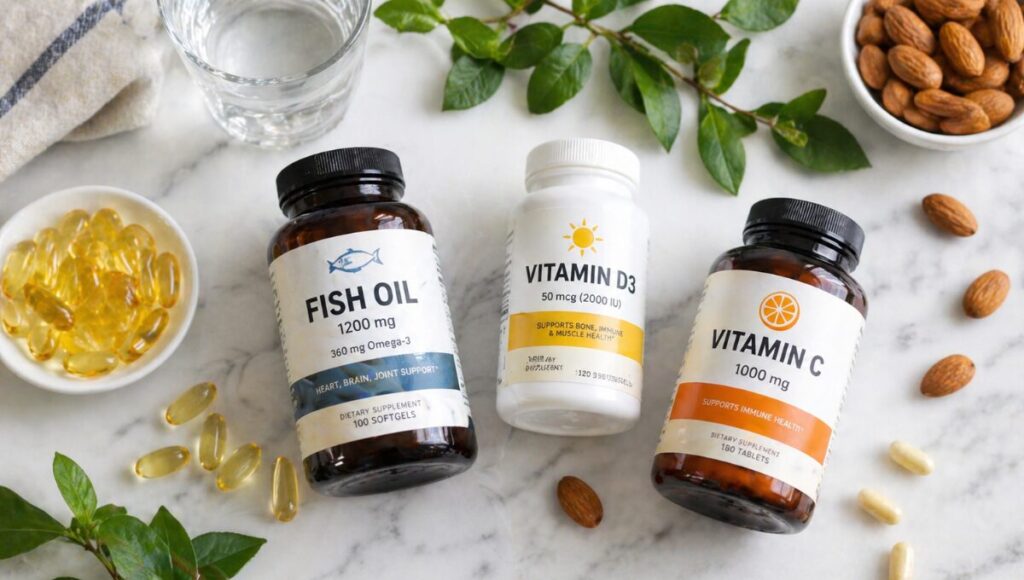
Vitamin D: The Foundation of Joint and Bone Health
If you could only prioritize one supplement for joint health after 50, Vitamin D would be a strong contender. This fat-soluble vitamin is essential for calcium absorption, bone mineralization, and immune regulation, three systems that directly impact how your joints feel day to day.
Research published in journals including Arthritis & Rheumatism has found consistent links between low Vitamin D levels and increased joint pain, greater severity of osteoarthritis symptoms, and accelerated cartilage loss. A large segment of Americans over 50 are deficient in Vitamin D, particularly those who spend limited time outdoors or live in northern states with less year-round sun exposure.
How it helps joints specifically: Vitamin D receptors are present in cartilage and synovial tissue. The vitamin helps regulate the immune cells that drive inflammatory responses in joints, and it supports the production of proteins needed to maintain cartilage health.
Dosage to consider: Most research on joint health benefits has used daily doses ranging from 1,000 to 4,000 IU. The Recommended Dietary Allowance for adults over 70 is 800 IU, but many functional medicine practitioners suggest higher levels for those with documented deficiency. Ask your doctor to test your 25-hydroxyvitamin D blood levels, this is the most accurate way to know where you stand.
Best forms: Vitamin D3 (cholecalciferol) is the preferred form, as it is more effective than D2 at raising blood levels. It is best absorbed when taken with a meal containing fat.
Vitamin C: Cartilage’s Building Block
Vitamin C is best known for immune support, but its role in joint health is equally significant and often overlooked. This water-soluble vitamin is essential for collagen synthesis, and collagen is the primary structural protein in cartilage, tendons, and ligaments.
Without adequate Vitamin C, the body cannot produce or repair collagen effectively. Over time, this can contribute to cartilage breakdown and slower recovery from joint stress or minor injury.
Studies have shown that people with higher dietary intake of Vitamin C tend to have lower rates of cartilage loss and reduced risk of developing osteoarthritis. Vitamin C also acts as a potent antioxidant, neutralizing the free radicals that can damage joint tissues and accelerate degeneration.
How it helps joints specifically: Beyond collagen synthesis, Vitamin C helps stabilize and activate other antioxidants in the body, including Vitamin E, creating a compounding protective effect in inflamed joint tissue.
Dosage to consider: The RDA for adults is 75–90 mg per day, but research on joint health and antioxidant activity often uses doses between 500 and 1,000 mg daily. This range is generally considered safe for most adults.
Best forms: Both ascorbic acid and buffered forms (such as calcium ascorbate) are well-absorbed. Buffered forms may be gentler on the stomach for those with digestive sensitivity.
Vitamin K2: The Underrated Joint Protector
Vitamin K is widely recognized for blood clotting, but its second form, Vitamin K2 (menaquinone), plays a more specific and underappreciated role in bone and joint health.
Vitamin K2 activates a protein called osteocalcin, which helps direct calcium into bones where it belongs, rather than allowing it to deposit in soft tissues like cartilage and blood vessel walls. For people over 50 whose calcium metabolism has shifted, this regulatory function becomes particularly important.
Research published in Osteoarthritis and Cartilage found that higher Vitamin K2 status was associated with lower rates of cartilage loss and better joint space maintenance in the knees. A separate study found that supplementation with MK-7, a specific form of K2, helped reduce markers of bone and cartilage breakdown.
How it helps joints specifically: K2 reduces abnormal calcium deposits in joint tissues, a process that contributes to stiffness and inflammation, while simultaneously supporting the bone density that keeps joints structurally sound.
Dosage to consider: Studies showing joint health benefits typically use 90 to 180 mcg per day of MK-7. Vitamin K2 is fat-soluble and best absorbed with a meal.
Important note: If you take blood-thinning medications like warfarin, speak to your doctor before supplementing with any form of Vitamin K, as it can interact with these medications.
Omega-3 Fatty Acids: Tackling Inflammation at the Source
While technically classified as essential fatty acids rather than vitamins, Omega-3s deserve a prominent place on this list because they address one of the root drivers of joint pain: chronic inflammation.
EPA (eicosapentaenoic acid) and DHA (docosahexaenoic acid), the active forms found in fish oil, work by modulating the production of pro-inflammatory compounds called prostaglandins and leukotrienes. In joint tissue, this translates to reduced swelling, less morning stiffness, and measurably lower pain levels, particularly for those with rheumatoid arthritis.
A meta-analysis published in Pain examined 17 randomized controlled trials and found that fish oil supplementation significantly reduced joint pain intensity and morning stiffness in patients with inflammatory joint conditions. The effects were comparable to some over-the-counter anti-inflammatory medications, with fewer side effects.
How it helps joints specifically: Omega-3s don’t just suppress inflammation, they also promote the resolution of inflammation through molecules called resolvins and protectins, helping tissues heal rather than remaining in a chronic inflammatory state.
Dosage to consider: Studies showing the greatest benefit for joint pain typically used doses of 1,000 to 3,000 mg of combined EPA and DHA per day. This is often equivalent to 3–6 standard fish oil capsules, depending on concentration, or 1–2 high-potency formulas.
Best sources: Look for supplements that specify the EPA and DHA content clearly, rather than just listing total fish oil. Enteric-coated capsules can reduce fishy aftertaste and improve tolerability.
Best Vitamins for Joint Pain After 50. Vitamin E: Antioxidant Defense for Joint Tissue
Vitamin E is a fat-soluble antioxidant that plays a protective role in joint health by neutralizing oxidative stress, a significant driver of cartilage breakdown and synovial membrane inflammation.
Clinical studies have investigated Vitamin E supplementation in osteoarthritis patients with promising results. One study found that participants taking 400 IU of Vitamin E per day reported significant reductions in pain and improved functional mobility compared to placebo groups. The mechanism appears to involve both direct antioxidant activity and modulation of inflammatory enzyme activity.
How it helps joints specifically: The synovial membrane that lines your joints is particularly vulnerable to oxidative damage. Vitamin E concentrates in this tissue and provides ongoing antioxidant protection, particularly during periods of physical activity when oxidative stress peaks.
Dosage to consider: Research has generally used 200 to 400 IU per day. Higher doses (above 1,000 IU) may increase bleeding risk and are not recommended without medical supervision.
Best forms: Natural Vitamin E (d-alpha-tocopherol) is more bioavailable than synthetic forms (dl-alpha-tocopherol). Mixed tocopherols — which include gamma and delta forms, may provide broader antioxidant coverage.
Magnesium: The Quiet Supporter of Bone and Muscle Health
Magnesium is involved in over 300 enzymatic reactions in the body, and its influence on joint health is both direct and indirect. Directly, magnesium is essential for bone density and calcium metabolism. Indirectly, it regulates muscle function, reduces inflammatory cytokines, and supports nerve signaling, all of which affect how joints feel during movement.
Studies show that magnesium deficiency is extremely common in adults over 50, often due to decreased dietary intake, increased urinary excretion, and reduced gut absorption that comes with age. Low magnesium levels have been linked to increased markers of inflammation and greater susceptibility to musculoskeletal pain.
How it helps joints specifically: Magnesium works synergistically with Vitamin D and Vitamin K2 to maintain bone density and regulate calcium deposition in joint tissues.
Dosage to consider: The RDA for adults over 50 is 320–420 mg per day. Magnesium glycinate and magnesium malate are particularly well-tolerated forms with good bioavailability. Magnesium oxide, while widely sold, is poorly absorbed and frequently causes digestive discomfort.
How to Build a Smart Joint Health Supplement Strategy
Rather than taking every supplement on this list at maximum dose, the most effective approach is strategic and personalized.
Start with bloodwork. Ask your doctor to check your Vitamin D, magnesium, and inflammatory markers. This gives you a data-driven foundation rather than guessing.
Prioritize based on your biggest gaps. For most Americans over 50, Vitamin D and Omega-3s tend to provide the most immediate impact, particularly if diet is low in fatty fish and sun exposure is limited.
Give supplements adequate time. Vitamins and nutrients generally need at least 8 to 12 weeks of consistent use before joint-related changes become noticeable. Realistic expectations prevent premature discontinuation.
Consider quality as a non-negotiable. Look for supplements that carry third-party certifications, USP, NSF International, or ConsumerLab, which verify that what’s on the label is actually in the bottle, and that harmful contaminants are absent.
Combine supplementation with lifestyle. The vitamins discussed here work best alongside regular low-impact movement, adequate hydration, an anti-inflammatory diet rich in whole foods, and appropriate weight management.
Read also: Natural Remedies for Joint Pain in Elderly: What Really Works After 50

Conclusion
Joint pain after 50 doesn’t have to be an inevitable part of aging, and nutritional science offers meaningful tools to address it. Vitamin D, Vitamin C, Vitamin K2, Omega-3 fatty acids, Vitamin E, and Magnesium each play distinct and well-documented roles in protecting cartilage, reducing inflammation, and maintaining the structural integrity your joints need to keep you moving comfortably.
The key is not to reach for everything at once, but to work with your healthcare provider to identify your specific deficiencies, choose high-quality supplements, and give your body the time it needs to respond. Combined with smart lifestyle choices, targeted nutritional support can be one of the most impactful investments you make in your long-term joint health and quality of life.
Frequently Asked Questions
What is the single most important vitamin for joint pain after 50?
Vitamin D is widely considered the most foundational supplement for joint health after 50 because it affects calcium absorption, bone density, cartilage health, and immune regulation simultaneously. Many adults over 50 are deficient, making it a high-priority starting point.
How long does it take for vitamins to help with joint pain?
Most nutritional supplements require consistent use for 8 to 12 weeks before noticeable changes in joint comfort occur. Some people experience improvements sooner, but patience and consistency are essential for meaningful results.
Can I get enough of these vitamins through diet alone?
For most people over 50, diet alone is often insufficient, particularly for Vitamin D, Omega-3s, and Magnesium. Aging reduces nutrient absorption, and modern diets frequently fall short of optimal levels. Supplementation fills these gaps effectively when chosen wisely.
Are there any vitamins I should avoid if I take prescription medications?
Vitamin K2 can interact with blood-thinning medications like warfarin. High-dose Vitamin E can increase bleeding risk. Always disclose all supplements to your healthcare provider, especially if you take any prescription medications.
Is fish oil safe to take daily for joint pain?
Yes, fish oil at doses up to 3,000 mg of EPA and DHA per day is generally considered safe for most adults. Those with fish allergies or who are on blood thinners should consult their doctor before use. Algae-based Omega-3 supplements offer a fish-free alternative with equivalent DHA content.
Do these vitamins help with rheumatoid arthritis or just osteoarthritis?
Both. Omega-3 fatty acids and Vitamin D have particularly strong evidence for inflammatory arthritis (including rheumatoid arthritis), while Vitamin C, K2, and Magnesium are especially relevant for osteoarthritis. These supplements are complementary to, not replacements for, prescribed rheumatoid arthritis treatments.
What should I look for on a supplement label to ensure quality?
Look for third-party certifications from organizations like USP (United States Pharmacopeia), NSF International, or ConsumerLab. These verify potency, purity, and that the product is free from harmful contaminants.
This article was written for informational purposes and reviewed for accuracy. It does not replace personalized medical advice. If you are experiencing significant joint pain, consult a qualified healthcare professional for diagnosis and treatment.

Lauren is the founder of PainFreeAfter50.com and a dedicated researcher in joint health and healthy aging. After developing chronic joint pain in her early 50s, she spent years reviewing clinical studies and testing natural approaches to find real solutions. Today she shares honest, evidence-based guidance to help adults over 50 manage pain, improve mobility, and reclaim their quality of life.