
Neck Pain After 50. You wake up. Your neck is stiff. You blame the pillow, buy a new one, and a few weeks later, you’re right back where you started. If this sounds familiar, you’re not alone.
Neck pain after 50 is one of the most common complaints doctors hear from people in this age group. And while your pillow might be part of the problem, it’s rarely the whole story. Let’s look at what’s really going on in your neck, how to tell if it’s something more serious, and what actually helps.
Why Neck Pain Becomes More Common After 50
Your neck does a lot of quiet, unglamorous work. It holds up your head, which weighs about as much as a bowling ball, and lets you turn, tilt, and nod dozens of times a day. Over decades, that adds up.
Doctors call the natural wear and tear that builds up in the neck over time cervical spondylosis. It happens because the discs that cushion the bones in your neck lose water and shrink as you age, so there’s more bone-on-bone contact than there used to be.
It’s extremely common: more than 85% of people over age 60 are affected by it, and the Mayo Clinic estimates the same is true for a large share of people over 60 specifically. The reassuring part is that nearly half of middle-aged and older adults have this kind of wear without any pain at all. Cervical Spondylosis (Arthritis of the Neck) – OrthoInfo – AAOS +2
So if you’re feeling stiffness or soreness, it doesn’t automatically mean something is badly wrong. It usually means your neck is doing what necks do after five decades of use.
Neck Pain After 50: What’s Actually Happening Inside Your Neck
As the discs in your spine dry out and lose height, the surrounding joints start to take on more pressure. The smooth cartilage that normally protects these joints gradually wears away, similar to what can happen in a knee or hip. In some cases, this narrows the space around your spinal cord and nerves, which is when tingling, numbness, or weakness in the arms or hands can show up.
OrthoInfo Most people, though, will simply notice pain and stiffness in the neck itself, not necessarily anything spreading into the arms.
So Is It Really Your Pillow?
Sometimes, yes, a lot of the time, actually.
Your pillow is supposed to keep your neck in a neutral, supported position all night. When it doesn’t, your neck muscles and ligaments end up working overtime for seven or eight hours straight. A few pillow-related habits that quietly cause trouble:
Sleeping on your stomach. This is considered the toughest position on your neck, since it forces your head to twist to one side for hours at a time. Studies looking at muscle activity during sleep have found that this sustained twisting noticeably increases strain and next-morning pain.
Using a pillow that’s too flat or too thick. If your pillow doesn’t match the distance between your ear and the outside of your shoulder when you’re on your side, your neck spends the night bent at an angle it was never meant to hold.
Feather or down pillows. They feel soft and cozy, but they compress quickly and don’t hold their shape, so they stop supporting your neck within an hour of lying down.
Not adjusting your pillow as your sleep position changes. Most people shift position many times a night. A pillow that only works for one position leaves your neck unsupported the rest of the time.
What Actually Helps at Night
- Back or side sleeping is generally easier on the neck than stomach sleeping.
- Side sleepers benefit from a slightly firmer, higher pillow that fills the gap between the ear and shoulder.
- Back sleepers do well with a pillow that supports the natural curve of the neck rather than pushing the chin toward the chest.
- If you sleep on your side, tucking a small pillow under your top arm can keep your shoulder from rolling forward and pulling on your neck.
- Give any new pillow a couple of weeks before deciding whether it’s working; your neck needs time to adjust too.

When It’s Something Else Entirely
Here’s the part worth paying attention to: if you’ve already tried a better pillow and better sleep position, and the pain is still there, or it’s getting worse, the cause may not be your bed at all.
A few common contributors after 50 that have nothing to do with pillows:
Daytime posture. Hours spent looking down at a phone or hunched over a laptop put ongoing strain on the same muscles that are supposed to rest at night. This is sometimes called “tech neck,” and it can undo any benefit from a good pillow.
Cervical spondylosis (arthritis of the neck). As covered above, this is simply the aging of the joints and discs in your neck. It responds well to movement, gentle stretching, and, when needed, physical therapy.
A pinched nerve (cervical radiculopathy). This happens when a nerve root in the neck gets compressed or irritated, often as a result of the same age-related changes. It can cause pain, tingling, or weakness that travels down into the shoulder, arm, or hand.
Muscle tension from stress. Emotional stress has a well-known habit of settling into the shoulders and neck. If your pain tends to build during stressful weeks, this may be a bigger factor than your mattress setup.
Everyday strain. Carrying a heavy bag on one shoulder, gardening, or even a long stretch of driving can leave muscles sore for days.
Read also: Best Menopause Supplement for Women Over 50 (Complete Guide)
Warning Signs That Deserve a Doctor’s Visit
Most neck pain after 50 is manageable and not a sign of anything dangerous. But it’s worth knowing which symptoms mean it’s time to get checked out rather than wait it out:
- Numbness, tingling, or weakness spreading into your arms or hands
- Trouble with balance, coordination, or walking
- Loss of bladder or bowel control
- Neck pain following a fall, accident, or other injury
- Pain paired with fever, chills, or unexplained weight loss
- Pain that keeps getting worse over several weeks instead of easing up
If you notice any of these, don’t wait for a new pillow to fix it. A doctor can check your reflexes, muscle strength, and range of motion and order imaging if needed to rule out anything more serious.
Simple Habits That Support a Healthier Neck
Along with fixing your sleep setup, a few daily habits go a long way:
- Move regularly. Gentle range-of-motion exercises, slowly turning your head side to side and tilting it toward each shoulder, help keep the joints from stiffening up.
- Check your screen height. Raise your phone or laptop so you’re not constantly looking down.
- Take breaks from sitting. Stand and stretch every hour if you spend a lot of time at a desk or in the car.
- Support your lower back too. Poor posture in your back often shows up as pain higher up in your neck.
- Apply heat for stiffness and ice for a flare-up. Both can ease discomfort while your neck settles down.
- Stay consistent with any physical therapy exercises your doctor or therapist recommends; these tend to help more than any single product.
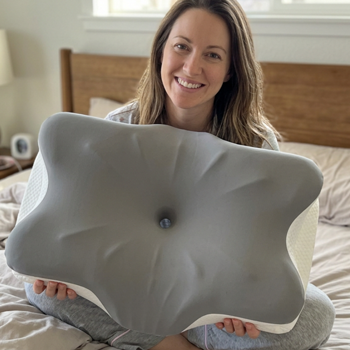
Contoured neck cradle Side-sleep wings Pressure-relief zones Premium memory foam Breathable cooling cover Helps reduce tossing, turning, and stiffness
The Bottom Line
Your pillow matters more than you might think, and it’s a smart, low-cost place to start. But after 50, it’s rarely the only piece of the puzzle. Age-related changes in the neck, daily posture habits, and stress all play a role too.
If you’ve upgraded your pillow and adjusted your sleep position and you’re still waking up sore, that’s your cue to look beyond the bedroom and possibly to talk with a doctor or physical therapist who can pinpoint what’s really going on.
Medical Disclaimer: This article is for informational purposes only and is not a substitute for professional medical advice, diagnosis, or treatment. Always consult your physician or a qualified healthcare provider with any questions about your health or a medical condition, especially if you’re experiencing new, severe, or worsening neck pain.
Frequently Asked Questions
Is neck pain after 50 normal?
Yes, to a large extent. Age-related wear and tear in the neck’s discs and joints is extremely common after 50, and it doesn’t always cause noticeable pain. Occasional stiffness is common, but pain that doesn’t improve or that spreads into your arms is worth discussing with a doctor.
What is the best pillow for neck pain after 50?
It depends on your sleep position. Side sleepers generally need a firmer, higher-loft pillow that fills the space between the ear and shoulder. Back sleepers usually do better with a pillow that supports the natural curve of the neck without pushing the chin down. Feather and down pillows tend to offer the least support.
How do I know if my neck pain is serious?
Watch for numbness, tingling, or weakness in your arms or hands, trouble with balance or coordination, loss of bladder or bowel control, or pain following an injury. Any of these are reasons to see a doctor rather than wait it out.
Can stress cause neck pain after 50?
Yes. Stress commonly causes muscles in the neck and shoulders to tense up, and this tension can build into ongoing pain, especially when combined with poor posture or a stressful stretch of weeks.
How long does neck pain usually last?
Muscle-related neck pain often improves within a few days to a couple of weeks with rest, gentle movement, and posture adjustments. Pain from arthritis-related changes in the neck tends to come and go rather than resolve completely, but it can usually be managed well with the right habits and, when needed, physical therapy.

Lauren is the founder of PainFreeAfter50.com and a dedicated researcher in joint health and healthy aging. After developing chronic joint pain in her early 50s, she spent years reviewing clinical studies and testing natural approaches to find real solutions. Today she shares honest, evidence-based guidance to help adults over 50 manage pain, improve mobility, and reclaim their quality of life.