
Joint Pain During Cold Weather in Seniors. If you’ve ever felt your knees stiffen the moment the temperature drops or woken up on a cold morning with aching hips before you’ve even gotten out of bed, you’re not imagining it. Millions of adults over 50 experience a predictable and frustrating pattern: as the thermometer falls, joint pain climbs.
The good news is that this isn’t something you simply have to endure. Understanding why cold weather affects your joints and what you can actively do about it puts you back in control, even in the middle of winter.
This article breaks it all down: the real reasons cold weather makes joints hurt more, which conditions are most affected, and the most effective strategies for staying comfortable and mobile all season long.
Why Does Cold Weather Make Joint Pain Worse?
The connection between cold temperatures and increased joint pain is real, well-documented, and rooted in several overlapping physiological mechanisms. It’s not just “in your head”; your body genuinely responds differently in colder conditions.
Joint Pain During Cold Weather in Seniors: Barometric Pressure Changes
One of the most studied explanations involves barometric pressure, the weight of the atmosphere pressing down on your body. When a cold front moves in, atmospheric pressure typically drops before the temperature does.
Inside your joints, there is a lining called the synovial membrane that produces fluid to cushion and lubricate the joint. When external pressure drops, tissues inside the joint can expand slightly. For a healthy joint, this is barely noticeable.
But for a joint already affected by arthritis, inflammation, or previous injury, even a small amount of expansion can put pressure on sensitive nerve endings, causing pain and stiffness.
Think of it like a balloon inside a confined space; when outside pressure decreases, the balloon tries to expand, pressing against the walls around it. That pressure is what you feel as aching or tightness.
Muscle Tension and Reduced Blood Flow
Cold causes muscles to contract and tighten as your body works to conserve heat. This natural protective response can significantly limit the range of motion around your joints and increase the strain placed on them during even simple movements.
At the same time, blood vessels near the skin surface constrict in cold temperatures to redirect blood flow toward your core organs. This means the muscles and soft tissues surrounding your joints receive less oxygenated blood, making them stiffer, more prone to cramping, and slower to warm up with activity.
Fluid Thickening in the Joint
The synovial fluid that lubricates your joints behaves similarly to oil in an engine; it becomes thicker and less effective at lower temperatures. This reduced viscosity means the joint surfaces don’t glide as smoothly, leading to that grinding, stiff feeling that is especially pronounced first thing in the morning on cold days.
Nerve Sensitivity
Cold temperatures can lower the pain threshold of nerve endings around the joints. Nerves that are already sensitized by chronic inflammation, as is common with osteoarthritis or rheumatoid arthritis, become even more reactive in the cold, amplifying pain signals that might otherwise go unnoticed.
Which Joint Conditions Are Most Affected by Cold?
Not every joint problem responds to cold the same way. These are the conditions most commonly aggravated by dropping temperatures:
Osteoarthritis
Osteoarthritis (OA) is the most common form of arthritis in adults over 50, affecting an estimated 32.5 million Americans. It occurs when the protective cartilage on the ends of bones gradually wears down, leaving joint surfaces to rub against each other.
Cold weather exacerbates OA because stiffened muscles provide less support to already compromised joints, and thickened synovial fluid reduces natural lubrication. The knees, hips, hands, and lower spine are most commonly affected.
Rheumatoid Arthritis
Rheumatoid arthritis (RA) is an autoimmune condition where the immune system attacks the joint lining. Many people with RA report that cold, damp weather significantly increases their flare-ups. The inflammatory process in RA joints makes them especially sensitive to pressure changes and temperature fluctuations.
Bursitis
Bursae are small fluid-filled sacs that cushion the areas around joints. Bursitis, inflammation of these sacs, can become noticeably more painful in cold weather, particularly in the shoulders, elbows, hips, and knees.
Old Injuries
Even joints that were injured years ago, like a sprained ankle, a repaired knee, or a fractured wrist, can become symptomatic again in cold weather. Scar tissue and old inflammation sites are often more sensitive to pressure and temperature changes than surrounding healthy tissue.
How to Manage Joint Pain in Cold Weather: Proven Strategies
Managing cold-weather joint pain effectively requires a combination of physical, environmental, and lifestyle strategies. There is no single magic solution, but layering several of these approaches together can make a dramatic difference.
1. Keep Your Body Warm — Strategically
This sounds obvious, but how you dress and heat your environment matters more than many people realize.
Layer your clothing with moisture-wicking base layers, insulating middle layers, and a windproof outer layer. Pay special attention to the joints most affected. Thermal knee sleeves, fingerless arthritis gloves, and hip-warming compression shorts are widely available and genuinely effective.
Warm your car before getting in. Sitting in a cold car seat stiffens the hip and lower back joints rapidly. Give yourself two to three minutes before driving.
Use an electric blanket or heating pad on affected joints before getting out of bed on cold mornings. Even ten minutes of gentle warmth can significantly reduce morning stiffness.
2. Keep Moving — Gently and Consistently
One of the worst things you can do for cold-weather joint pain is stop moving. Inactivity leads to more stiffness, weaker supporting muscles, and a faster return of pain.
The goal is gentle, consistent movement, not intense exercise. Consider:
- Indoor walking at a mall, community center, or on a treadmill
- Water aerobics or swimming in a heated pool (warm water is especially beneficial because it reduces joint load while improving circulation)
- Chair yoga or seated stretching to maintain range of motion without putting excessive pressure on painful joints
- Tai chi, which research published in the Annals of Internal Medicine found to be as effective as physical therapy for reducing knee osteoarthritis pain
Aim for at least 20 to 30 minutes of low-impact movement most days, even if it’s broken into shorter segments throughout the day.
3. Warm Up Before Any Activity
Never go straight from sitting or sleeping into physical activity in cold weather. Cold muscles and joints need time to adapt.
A simple warm-up routine before outdoor activity:
- Five minutes of gentle marching in place indoors
- Slow ankle circles, knee lifts, and hip rotations
- A few minutes of arm swings and shoulder rolls
This increases blood flow to joints, thickens the synovial fluid to a more functional consistency, and dramatically reduces injury risk.
4. Use Heat Therapy Intentionally
Moist heat is often more effective than dry heat for joint pain. Options include:
- Warm showers or baths, especially in the morning
- Moist heating pads applied to stiff joints for 15 to 20 minutes
- Paraffin wax baths for hand and finger arthritis (widely used in occupational therapy and available as home units)
Important: Do not apply heat directly to an acutely inflamed, swollen joint. If the joint is red and hot to the touch, cold compresses may be more appropriate in the short term.
5. Stay Hydrated
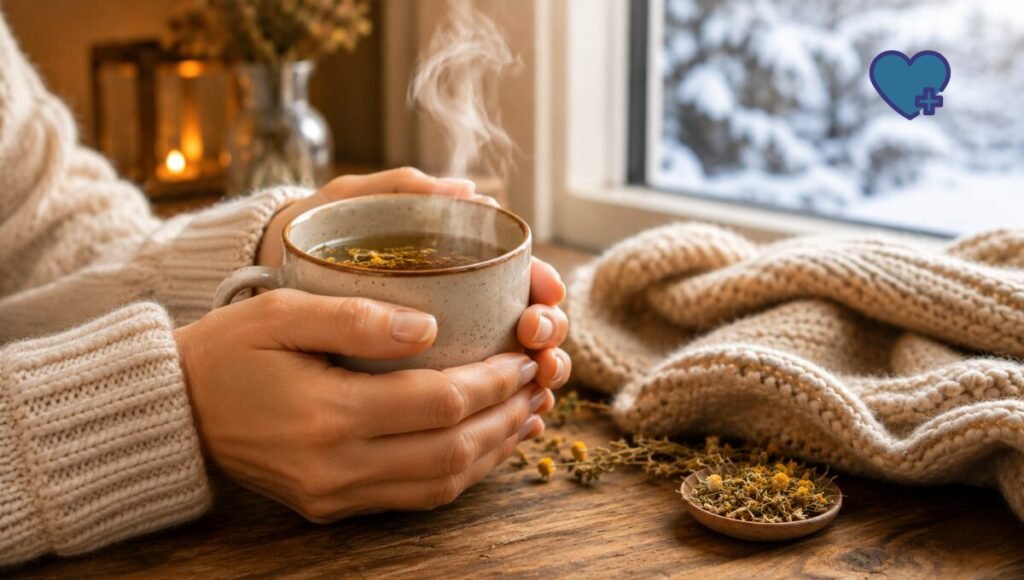
Many people drink less water in winter because they don’t feel as thirsty. But dehydration thickens the synovial fluid and can increase joint discomfort. Aim for at least six to eight glasses of water daily, and consider warm herbal teas as a way to stay hydrated while also warming your core.
6. Consider Anti-Inflammatory Nutrition
What you eat plays a meaningful role in systemic inflammation levels, which directly affects joint pain. During winter months, when you may be less active and eating more comfort foods, being intentional about nutrition matters more than ever.
Foods with strong anti-inflammatory evidence include:
- Fatty fish such as salmon, mackerel, and sardines (rich in omega-3 fatty acids)
- Berries, which are high in antioxidants that combat oxidative stress in joint tissue
- Turmeric, which contains curcumin, has been shown in multiple studies to reduce joint pain comparable to ibuprofen in some OA patients when taken consistently
- Leafy greens such as spinach, kale, and Swiss chard
- Olive oil, which contains oleocanthal, a compound with anti-inflammatory properties similar to NSAIDs
Limit processed foods, refined sugars, and excessive alcohol, all of which can amplify inflammatory responses.
7. Evaluate Supplements With Your Doctor
Several supplements have meaningful clinical evidence for joint health:
- Glucosamine and chondroitin: Support cartilage integrity; most studied for knee osteoarthritis
- Omega-3 fish oil: Reduces inflammatory cytokines; shown to decrease morning stiffness in RA patients
- Vitamin D: D: D: Many older adults are deficient in winter months; low levels are associated with increased joint pain and autoimmune disease activity. Testing your levels and supplementing appropriately (typically 1,000–2,000 IU daily, under physician guidance) is advisable
- Magnesium: Supports muscle relaxation and nerve function; low levels are associated with increased pain sensitivity
Always consult your physician before adding supplements, especially if you take prescription medications.
8. Protect Your Mental Health
Chronic pain in winter, combined with shorter days and reduced outdoor time, creates real risk for depression and anxiety in older adults. Pain and mood are deeply connected; low mood amplifies pain perception, and increased pain worsens mood.
Stay socially connected. Consider light therapy lamps if seasonal mood changes are an issue. Gentle mindfulness or breathing practices have also been shown to meaningfully reduce pain perception when practiced consistently.
When to See a Doctor
Cold-weather joint pain that is managed with the strategies above is generally not a medical emergency. However, see your doctor if you experience:
- Sudden, severe joint pain with no clear cause
- Significant swelling, redness, or warmth in a joint
- Fever accompanying joint pain (which can indicate infection)
- Pain that is rapidly worsening and not responding to home management
- Loss of mobility in a joint that was previously functional
Your physician may recommend prescription anti-inflammatory medications, corticosteroid injections, physical therapy referrals, or imaging to evaluate joint conditions more precisely.

Key Takeaways
- Cold weather causes joint pain to worsen in seniors primarily due to drops in barometric pressure, muscle tightening, thickened synovial fluid, and increased nerve sensitivity.
- Osteoarthritis, rheumatoid arthritis, bursitis, and old joint injuries are the conditions most commonly aggravated by cold temperatures.
- Keeping joints warm with appropriate layering and targeted heat therapy is one of the most immediately effective strategies.
- Gentle, consistent movement, not rest, is the right response to cold-weather joint stiffness.
- Anti-inflammatory nutrition, proper hydration, and physician-guided supplementation (particularly vitamin D and omega-3s) provide meaningful background support.
- Cold-weather joint pain is manageable. A layered, proactive approach through the winter months can keep you comfortable, mobile, and active.
Frequently Asked Questions
Why do my joints hurt more when it rains or a storm is coming?
The drop in barometric pressure that typically precedes rain and storms allows tissues inside already-sensitive joints to expand slightly, putting pressure on nerve endings. Many people with arthritis are remarkably accurate at predicting weather changes for exactly this reason.
Is it safe to exercise outdoors in the winter if I have arthritis?
For most seniors with arthritis, outdoor exercise in cold weather is safe with the right precautions: dress in warm, moisture-wicking layers, warm up indoors first, protect vulnerable joints with compression sleeves or gloves, and choose flat, stable surfaces to avoid falls. If temperatures are extreme (below 20°F / -7°C) or conditions are icy, moving activity indoors is wisest.
Does moving to a warmer climate actually help joint pain?
Many people with arthritis report significant improvement when relocating to warmer, drier climates, and there is some research to support this. However, the benefit is not universal. Factors like overall lifestyle, activity level, and the specific type of arthritis also play major roles.
Can vitamin D deficiency make cold-weather joint pain worse?
Yes. Vitamin D plays a role in immune regulation and inflammation control, and deficiency is associated with increased musculoskeletal pain. Since sunlight exposure drops dramatically in winter, the body’s primary vitamin D source, supplementation, is particularly worth discussing with your doctor during colder months.
Are heating pads or ice packs better for winter joint pain?
For chronic stiffness and aching due to arthritis, heat is generally preferable; it relaxes muscles, improves circulation, and loosens stiff joints. Ice or cold therapy is more appropriate for acute flares with active swelling and heat in the joint. When in doubt, ask your doctor or physical therapist which one is right for your specific situation.
How long does morning stiffness usually last in cold weather?
With osteoarthritis, morning stiffness typically improves within 30 minutes of gentle movement. With rheumatoid arthritis, stiffness lasting more than 45 to 60 minutes, particularly in cold weather, is common and can indicate active inflammation that warrants medical attention.
Are there specific exercises that are especially good for cold-weather joint pain relief?
Heated pool exercises (aquatic therapy) are among the most effective options in winter, as warm water reduces joint load while improving mobility and circulation. Tai chi, chair yoga, and gentle cycling on a stationary bike are also excellent year-round options that are particularly valuable when outdoor activity is limited.
Can diet changes really make a difference for joint pain in winter?
Yes, meaningfully so over time. Diets high in omega-3 fatty acids, antioxidants, and anti-inflammatory compounds (like curcumin from turmeric) have demonstrated measurable reductions in inflammatory markers and joint pain in clinical research. The effect is not immediate but builds over several weeks of consistent dietary patterns.
Medical Disclaimer: The information provided in this article is for educational purposes only and is not intended as medical advice. It does not replace consultation with a qualified healthcare professional. Always speak with your doctor or a licensed medical provider before starting any new supplement, exercise program, or treatment plan, especially if you have a diagnosed medical condition or take prescription medications.

Lauren is the founder of PainFreeAfter50.com and a dedicated researcher in joint health and healthy aging. After developing chronic joint pain in her early 50s, she spent years reviewing clinical studies and testing natural approaches to find real solutions. Today she shares honest, evidence-based guidance to help adults over 50 manage pain, improve mobility, and reclaim their quality of life.