
If you’ve started noticing more aches in your feet and ankles as the years go by, you’re not alone. Foot and ankle pain after 50 is one of the most common complaints among adults in this age group, and for good reason. Your feet have been carrying your entire body weight for decades, and over time, the cumulative wear starts to show.
But here’s the question many people ask: Is this pain just a normal part of getting older, or is something more serious going on?
The answer matters. Ignoring the wrong kind of pain can lead to worsening mobility, increased fall risk, and a significant drop in quality of life. In this article, we break down what’s considered normal aging in the feet and ankles, what warning signs should prompt a visit to your doctor, and what you can do to find relief.
How Aging Affects Your Feet and Ankles
To understand what’s normal and what’s not, it helps to know what’s actually happening to your feet as you age.
Starting in your 40s and 50s, several structural and biological changes begin to affect foot and ankle health:
Loss of fat padding. The natural fat cushioning in the soles of your feet gradually thins with age. This padding acts as a shock absorber, and without it, every step can feel harder and more uncomfortable, especially on hard surfaces.
Reduced flexibility. The tendons and ligaments that support your feet and ankles become less elastic over time. This can make the joints feel stiff, particularly first thing in the morning or after a long period of sitting.
Changes in arch structure. Many adults over 50 experience a flattening of the arch, sometimes referred to as adult-acquired flatfoot. This shift in foot mechanics can cause aching along the inside of the foot and ankle.
Skin and nail changes. Thickening toenails, dry and cracked skin, and slower circulation are all common after 50 and can contribute to discomfort.
Decreased bone density. Osteoporosis and osteopenia become more prevalent with age, making the small bones in the feet and ankles more vulnerable to stress fractures.
Understanding these baseline changes helps you distinguish between what’s expected and what might be a red flag.
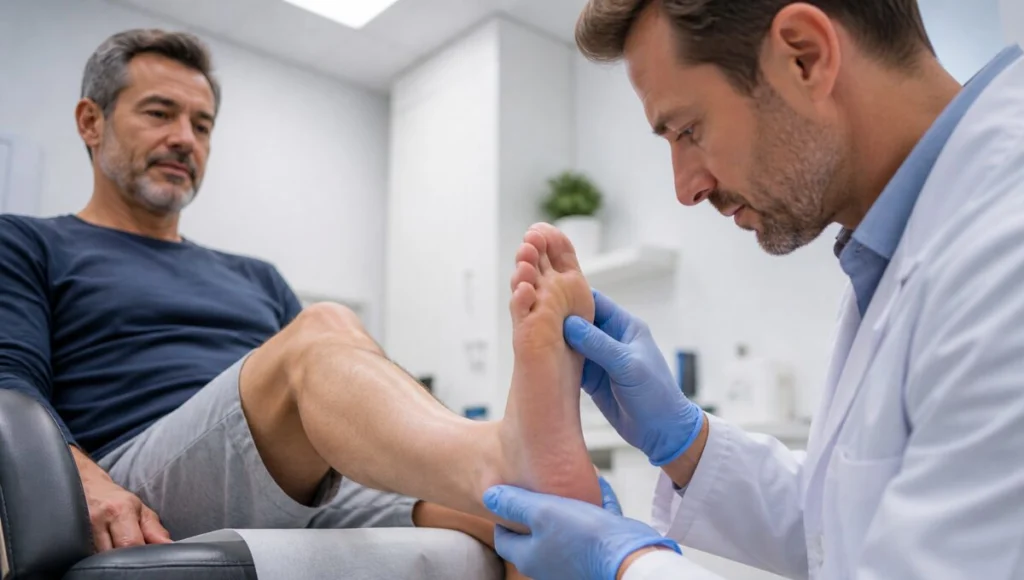
What’s Normal: Expected Foot and Ankle Discomfort After 50
Not every ache in your feet signals a serious problem. Here are some types of discomfort that are generally considered a normal part of aging:
Mild Morning Stiffness
Waking up with slightly stiff feet and ankles is very common after 50. After hours of rest, the joints and tissues tighten up. This stiffness typically improves within 15 to 30 minutes of moving around.
What to do: Gentle foot stretches before getting out of bed can help significantly. Calf stretches, toe flexes, and ankle circles are a great way to ease into the morning.
General Foot Fatigue After Standing or Walking
If your feet feel tired, achy, or heavy after a long day on your feet, this is largely normal, especially if you’re not used to extended activity. The thinning of fat pads and reduced cushioning in the soles makes prolonged standing more demanding than it used to be.
What to do: Invest in supportive footwear with good arch support and cushioning. Avoid going barefoot on hard floors for long periods.
Read also: Best Vitamins for Joint Pain After 50: What Science Actually Recommends
Occasional Ankle Stiffness After Inactivity
Sitting for long periods and then standing can cause temporary ankle stiffness. This is related to the reduced elasticity in the connective tissues and is generally harmless.
What to do: Make a habit of ankle rolls and gentle movement breaks throughout the day, especially if your job involves prolonged sitting.
Mild Achiness in the Ball of the Foot
The metatarsal area (the ball of the foot) often becomes more sensitive with age due to fat pad loss. Mild discomfort in this area after activity is common.
What to do: Metatarsal pads inserted into your shoes can redistribute pressure and relieve this type of pain effectively.
What’s Not Normal: Symptoms That Warrant Medical Attention
While some foot and ankle discomfort is expected, certain symptoms should never be dismissed as “just aging.” These may be signs of a treatable, or urgent, condition.
Sharp, Stabbing Heel Pain
If you experience intense heel pain with your first steps in the morning or after periods of rest, this is a hallmark symptom of plantar fasciitis, one of the most common foot conditions in adults over 50.
Plantar fasciitis involves inflammation of the thick band of tissue (the plantar fascia) that runs along the bottom of your foot. Without treatment, it tends to worsen over time.
See a doctor if: The heel pain is severe, persists beyond a few minutes of walking, or has been going on for more than two weeks.
Swelling That Doesn’t Go Away
Occasional swelling in the ankles at the end of the day may be normal, especially in hot weather or after long periods of sitting. However, persistent or significant swelling, particularly in one ankle, can indicate:
See a doctor if: Swelling is sudden, affects only one leg, is accompanied by redness or warmth, or doesn’t improve with elevation and rest within 24–48 hours.
Numbness, Tingling, or Burning Sensations
Sensations like numbness, pins and needles, or burning in the feet, especially at night, can be signs of peripheral neuropathy, which is particularly common in people with diabetes, vitamin B12 deficiency, or thyroid disorders. Morton’s neuroma, a thickening of tissue around a nerve between the toes, can also cause burning or tingling in the ball of the foot.
See a doctor if: These sensations are frequent, interfere with sleep, or are spreading.
Joint Pain That Is Warm, Red, or Swollen
Redness, warmth, and significant swelling around a joint, particularly the big toe, can be a sign of gout, a type of inflammatory arthritis caused by a buildup of uric acid crystals. Gout attacks can be intensely painful and come on suddenly, often at night.
Rheumatoid arthritis can also affect the small joints of the feet, causing similar symptoms along with morning stiffness lasting more than 30 minutes.
See a doctor if: Joint pain is accompanied by heat, redness, or visible swelling, or if you suspect gout or inflammatory arthritis.
Foot or Ankle Pain After a Fall or Injury
This one may seem obvious, but many adults try to “walk off” ankle injuries. If you’ve had a fall, twisted your ankle, or experienced sudden trauma to your foot, it’s important to get evaluated. What feels like a sprain could be a fracture, and the small bones in the foot are particularly prone to stress fractures in people with lower bone density.
See a doctor if: Pain following an injury is severe, worsens with weight-bearing, or is accompanied by bruising and significant swelling.
Changes in Skin Color or Temperature
If one foot appears pale, bluish, or significantly cooler to the touch than the other, this can indicate a circulatory problem or peripheral artery disease (PAD). Conversely, a foot that is consistently red and hot may indicate infection or inflammation.
See a doctor immediately if: A foot or ankle becomes significantly discolored, cold to the touch, or shows signs of a wound that won’t heal.
Common Foot and Ankle Conditions in Adults Over 50
Here’s a quick reference guide to the most common conditions that cause foot and ankle pain after 50:
Plantar Fasciitis
What it is: Inflammation of the plantar fascia, the connective tissue along the bottom of the foot. Key symptom: Sharp heel pain with first steps in the morning. Treatment options: Stretching, physical therapy, orthotic inserts, anti-inflammatory measures, and in persistent cases, cortisone injections.
Osteoarthritis of the Foot and Ankle
What it is: Cartilage breakdown in the joints of the foot and ankle, leading to pain, stiffness, and reduced range of motion. Key symptom: Deep aching pain that worsens with activity and improves with rest; joint stiffness. Treatment options: Low-impact exercise, weight management, supportive footwear, NSAIDs, physical therapy.
Achilles Tendinopathy
What it is: Degeneration of the Achilles tendon, often due to overuse or sudden increase in activity. Key symptom: Pain and stiffness along the back of the heel and lower leg, especially in the morning or after exercise. Treatment options: Rest, eccentric heel exercises, physical therapy, orthotic support.
Bunions (Hallux Valgus)
What it is: A bony bump that forms at the base of the big toe as it shifts out of alignment. Key symptom: Visible bony protrusion at the big toe joint, pain and redness with tight footwear. Treatment options: Wide-toe-box shoes, bunion pads, orthotics, and in severe cases, surgery.
Gout
What it is: Inflammatory arthritis caused by uric acid crystal buildup in joints. Key symptom: Sudden, intense pain, often in the big toe, that may occur at night. Treatment options: Medication to manage uric acid levels, dietary changes, anti-inflammatory drugs during flare-ups.
Morton’s Neuroma
What it is: Thickening of tissue around a nerve between the third and fourth toes. Key symptom: Burning, tingling, or the sensation of walking on a pebble in the ball of the foot. Treatment options: Wider shoes, metatarsal pads, corticosteroid injections, and in some cases, surgery.
Tips for Keeping Your Feet and Ankles Healthy After 50
Prevention and proactive care go a long way in managing foot and ankle health as you age. Here are the most effective strategies:
Wear the right shoes. This is the single most impactful thing you can do. Choose shoes with arch support, a wide toe box, good cushioning, and a firm heel counter. Avoid flat, unsupportive shoes like flip-flops for extended periods.
Stretch daily. Make calf stretches, plantar fascia stretches, and ankle range-of-motion exercises part of your daily routine. This helps maintain flexibility and reduce injury risk.
Maintain a healthy weight. Every extra pound places additional stress on your feet and ankles. Even a modest reduction in weight can significantly reduce foot pain.
Stay active with low-impact exercise. Swimming, cycling, and walking on softer surfaces are excellent ways to keep your joints healthy without excessive impact.
Inspect your feet regularly. Look for changes in skin color, nail health, swelling, or new growths. This is especially important for people with diabetes, who may have reduced sensation in the feet.
Use orthotics if needed. Custom or over-the-counter orthotic inserts can correct alignment issues and redistribute pressure away from painful areas.
Elevate your feet. At the end of the day, elevating your feet above heart level for 15–20 minutes can help reduce swelling and improve circulation.
When to See a Podiatrist vs. Your Primary Care Doctor
For most foot and ankle concerns, starting with your primary care physician is a reasonable first step. However, a podiatrist (a doctor specializing in foot and ankle health) is the right choice when:
- Pain is persistent and has not responded to home treatment
- You suspect a structural issue (bunions, fallen arches, tendon problems)
- You have diabetes and any foot concern (no matter how minor)
- You need a custom orthotic fitting
- A fracture, ligament tear, or surgical intervention may be necessary
Don’t wait too long to seek care. Many foot conditions that are easily treatable in early stages become significantly harder, and more expensive, to address if ignored.

Final Thoughts
Foot and ankle pain after 50 is incredibly common, but it doesn’t have to be your new normal. Understanding the difference between expected age-related changes and symptoms that signal a real problem gives you the power to take action at the right time.
The bottom line: mild stiffness and fatigue are part of the journey. Sharp, persistent, or accompanied-by-swelling pain is your body asking for help. Listen to it.
Taking care of your feet is one of the best investments you can make in your long-term mobility and independence. The sooner you address issues, the better your chances of staying active, comfortable, and pain-free in the years ahead.
Medical Disclaimer: The information provided in this article is for educational purposes only and is not intended as medical advice. Always consult a qualified healthcare provider before starting any new treatment or if you have concerns about your health.
Frequently Asked Questions About Foot and Ankle Pain After 50
Is foot pain a normal part of aging?
Some degree of foot discomfort is common as we age due to changes in fat padding, flexibility, and joint health. However, significant or persistent pain is not something you simply have to accept, most foot conditions respond well to treatment.
What is the most common cause of heel pain in adults over 50?
Plantar fasciitis is by far the most common cause of heel pain in this age group. It causes sharp pain with the first steps of the day and usually improves as you warm up.
Can arthritis affect the feet and ankles?
Yes. Both osteoarthritis and rheumatoid arthritis can affect the joints of the feet and ankles, causing pain, stiffness, and in some cases, visible deformity.
What type of shoes are best for foot and ankle pain after 50?
Look for shoes with firm arch support, a cushioned sole, a wide toe box, and a supportive heel counter. Brands that specialize in comfort footwear (such as New Balance, Brooks, or HOKA) are often recommended by podiatrists.
Is it safe to exercise with foot and ankle pain?
It depends on the cause. Low-impact activities like swimming or cycling are usually safe and beneficial. High-impact activities like running should be avoided during pain flares. Always consult your doctor before starting a new exercise program.
When should I go to the emergency room for foot pain?
Go to the ER if you’ve had a significant injury and suspect a fracture, if a foot is suddenly cold, pale, or blue (possible circulation emergency), or if you have a wound on your foot that shows signs of serious infection (red streaking, fever, spreading warmth).

Lauren is the founder of PainFreeAfter50.com and a dedicated researcher in joint health and healthy aging. After developing chronic joint pain in her early 50s, she spent years reviewing clinical studies and testing natural approaches to find real solutions. Today she shares honest, evidence-based guidance to help adults over 50 manage pain, improve mobility, and reclaim their quality of life.