

How to Relieve Knee Pain at Home for Seniors. You step out of bed in the morning, and before you even reach the bathroom, your knee is already reminding you it’s there. That dull, deep ache, sometimes a sharp twinge, sometimes a stiffness that makes the first few steps feel ten years older than they should, is something millions of Americans over 50 know all too well.
According to the CDC, nearly one in three adults over 65 experiences frequent knee pain. But here’s what most people don’t realize: you don’t have to just live with it, and you don’t need to immediately turn to surgery or heavy medication. There is a lot you can do, right at home, starting today, to significantly reduce knee pain and get back to moving the way you want to.
In this guide, you’ll find seven practical, evidence-based methods to relieve knee pain at home for seniors. We’ll also cover what NOT to do, when it’s time to call a doctor, and a simple morning routine that takes just 10 minutes.
Why Does Knee Pain Get Worse After 50?
Before we get to the solutions, it helps to understand what’s actually happening inside your knee, because once you do, the remedies make a lot more sense.
Your knee is one of the largest and most complex joints in your body. It depends on cartilage, ligaments, muscles, and fluid to move smoothly. As we age, several changes happen:
– Cartilage thins and wears down. The protective cushion between your bones gradually breaks down, leading to bone-on-bone friction, the hallmark of osteoarthritis.
– Muscles around the joint weaken. The quadriceps and hamstrings are your knee’s natural shock absorbers. When they lose strength, the joint takes on more stress.
– Inflammation becomes more common. Chronic low-grade inflammation, often worsened by diet and inactivity, contributes to pain and swelling.
– Synovial fluid decreases. This natural lubricant inside the joint becomes less abundant over time, reducing smooth movement.
The most common culprit behind knee pain in seniors is osteoarthritis, a gradual wearing of the joint. But knee bursitis, tendinitis, past injuries, and excess body weight also play a role.
The good news? Most of these factors are manageable. You can’t reverse aging, but you can significantly slow down its effects on your knees and reduce pain in the process.
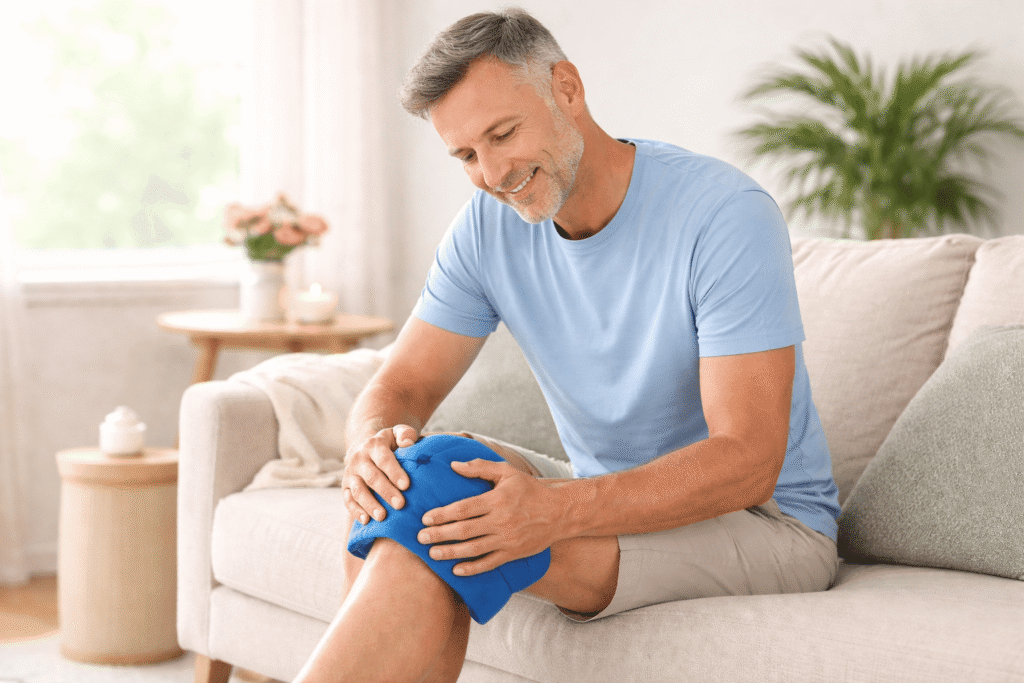
7 Effective Ways to Relieve Knee Pain at Home for Seniors
These methods are backed by research and recommended by orthopedic specialists and physical therapists. You don’t need to do all seven at once, start with two or three that feel doable, and build from there.
How to Relieve Knee Pain at Home for Seniors: Hot and Cold Therapy
One of the simplest and most effective tools for knee pain is already in your home: temperature. Used correctly, heat and cold work in different situations and offer fast, drug-free relief.
– Use cold (ice pack) when your knee feels swollen or inflamed or has just flared up after activity. Cold reduces swelling and numbs sharp pain. Apply for 15–20 minutes, with a cloth between the ice and your skin.
– Use heat (heating pad or warm towel) for stiffness and chronic, dull pain, especially first thing in the morning. Heat relaxes muscles and improves circulation to the joint.
– Never apply ice or heat directly to bare skin. Always use a layer of cloth in between.
Quick tip: Not sure which to use? When in doubt, start with cold for the first 48–72 hours after pain flares up, then switch to heat for ongoing stiffness.
Gentle, Low-Impact Exercise
How to Relieve Knee Pain at Home for Seniors: Hot and Cold Therapy. It may seem counterintuitive, but resting too much is one of the worst things you can do for knee pain. Movement keeps the joint lubricated and the surrounding muscles strong.
The key is choosing the right type of movement, low-impact activities that don’t stress the knee:
– Walking on flat surfaces, ideally 20–30 minutes a day. Even 10 minutes makes a difference.
– Swimming or water aerobics: the buoyancy of water removes nearly all pressure from your joints.
– Seated leg lifts: sit in a chair, straighten one leg, and hold for 5 seconds. Repeat 10 times per leg. This strengthens the quadriceps with zero stress on the knee.
– Stationary cycling, great for range of motion with minimal impact.
Remember: A little soreness after exercise is normal. Sharp pain during exercise is not normal; stop and rest if that happens.
Knee-Strengthening Stretches
Tight muscles are a major contributor to knee pain. When the hamstrings, quadriceps, and calf muscles are stiff, they pull unevenly on the knee joint. Regular stretching helps restore balance and reduce that tension.
Try these stretches daily; all can be done at home, many while seated or lying down:
– Seated hamstring stretch: Sit on the edge of a chair, straighten one leg with your heel on the floor. Gently lean forward from the hips until you feel a mild pull behind your thigh. Hold 20–30 seconds per side.
– Quad stretch: Standing near a wall for balance, bend one knee and gently pull your ankle toward your backside. Hold 20 seconds. (Lying version: lie on your side, bend the top knee and pull your ankle toward you.)
– Calf stretch: Stand facing a wall, place both hands on it. Step one foot back, press the heel into the floor, and lean forward gently. Hold 20–30 seconds.
Healthy Weight Management
For every extra pound of body weight you carry, your knees experience roughly four times that amount of pressure with each step. That means just 10 extra pounds puts 40 pounds of additional stress on each knee joint.
The encouraging flip side: losing even a modest amount of weight, 10 to 15 pounds, can make a significant, noticeable difference in daily knee pain. Small, consistent changes to your diet combined with gentle movement add up over time.
Gentle reminder: This isn’t about appearance; it’s about reducing the mechanical load on a joint that’s already working hard. Even a small change helps.

Topical Pain Relief Creams
How to Relieve Knee Pain at Home for Seniors. Over-the-counter topical treatments are a great option for seniors who want to avoid or reduce oral pain medications. Applied directly to the skin, they work locally with minimal systemic side effects.
– Diclofenac gel (Voltaren): An anti-inflammatory gel now available over the counter. Studies show it’s highly effective for knee osteoarthritis and generally safer than oral NSAIDs for older adults.
– Menthol-based creams (like Bengay or Icy Hot): Create a cooling or warming sensation that can ease pain signals and improve local circulation.
– Capsaicin cream: Derived from chili peppers, it works by depleting a pain-signaling chemical in nerve endings. Takes a few weeks of consistent use to show results.
Before you buy: Talk to your pharmacist or doctor, especially if you take blood thinners or have sensitive skin. Always do a small patch test first.
Knee Braces and Compression Sleeves
A good knee sleeve or brace can provide meaningful support and pain relief, especially for everyday activities like walking, grocery shopping, or climbing stairs.
– Compression sleeves reduce swelling, provide warmth, and give the joint a sense of stability. They’re comfortable enough to wear all day.
– Unloader braces are more structured and designed for osteoarthritis; they shift weight away from the most damaged part of the joint. Worth discussing with your doctor.
– Patellar tracking braces help if your pain is specifically around the kneecap.
Look for sleeves with moisture-wicking material if you plan to wear them during activity. The fit should be snug but never tight enough to cut off circulation.
Anti-Inflammatory Foods and Supplements
What you eat genuinely affects joint inflammation and, therefore, pain. An anti-inflammatory diet won’t eliminate knee pain on its own, but it’s a powerful complement to everything else on this list.
Foods that help:
– Fatty fish (salmon, sardines, mackerel), rich in omega-3 fatty acids, which reduce inflammatory markers in the body.
– Turmeric with black pepper, curcumin, its active compound, has well-documented anti-inflammatory effects.
– Berries (blueberries, strawberries, cherries), packed with antioxidants that fight joint inflammation.
– Leafy greens (spinach, kale) are high in vitamin K and antioxidants that support bone and joint health.
– Olive oil contains oleocanthal, which acts similarly to ibuprofen in reducing inflammation.
Supplements worth considering: glucosamine and chondroitin may help with cartilage support; results vary by person, so discuss with your doctor first.
Foods to reduce: processed foods, refined sugars, fried foods, and excessive alcohol all promote inflammation and may worsen joint pain.
What NOT to Do When Your Knee Hurts
Just as important as knowing what helps is knowing what to avoid. These common mistakes can slow your recovery or make pain significantly worse:
– Staying completely still for days. Complete bed rest leads to muscle weakness, joint stiffness, and actually more pain over time. Light movement is almost always better.
– Jumping into high-impact activities. Running, jumping, or intense aerobics when your knee is already painful can accelerate cartilage damage.
– Overusing oral pain medications. Regular use of NSAIDs (like ibuprofen) without medical supervision carries risks for older adults, stomach bleeding, kidney strain, and cardiovascular effects. Topical options are often a smarter choice.
– Ignoring pain that progressively worsens. Pain that steadily increases over days or weeks, or changes in character, deserves medical attention.
– Wearing unsupportive footwear. Flat shoes or worn-out sneakers change the way force travels through your knee. Supportive, cushioned footwear makes a real difference.
When Home Remedies Aren’t Enough: Signs You Should Call Your Doctor
How to Relieve Knee Pain at Home for Seniors. Home remedies work well for chronic, manageable knee pain. But some symptoms require professional evaluation. Call your doctor if you notice any of the following:
– Swelling that doesn’t go down after 3 days of rest and ice
– Your knee locks, buckles, or gives out when you put weight on it
– Severe pain following a fall or direct injury to the knee
– Redness and warmth around the joint (possible infection or gout)
– Pain that consistently wakes you up at night
– Visible deformity or significant change in knee shape
Important: This article is for informational purposes only and does not replace professional medical advice. Always consult your doctor before starting a new exercise or treatment routine.

A Simple 10-Minute Morning Routine for Knee Pain Relief
One of the most powerful things you can do for your knees is build a short, consistent morning routine. Do this before you start your day to warm up the joint, reduce stiffness, and move more freely.
Do this while still in bed or sitting on the edge of the mattress:
1. Ankle circles (1 minute): Rotate each ankle slowly 10 times in each direction. Gets blood moving and prepares the joints below the knee.
2. Lying knee bends (1–2 minutes): Slowly slide one heel toward your backside, bending the knee. Hold for 5 seconds, then straighten. Repeat 10 times per leg. Gently lubricates the joint with synovial fluid.
3. Apply heat (3 minutes), Place a warm heating pad or warm damp towel on your knee for 3 minutes before standing. This relaxes muscles and reduces morning stiffness dramatically.
4. Seated leg raises (2 minutes): Sit on the edge of the bed or a chair. Straighten one leg and hold for 5 seconds, then lower slowly. Repeat 10 times per leg. Activates your quadriceps, your knee’s best support muscles.
5. Seated calf raises (1 minute), While seated, press your toes down and lift your heels off the floor. Hold 2 seconds. Repeat 15 times. Improves circulation before your first steps of the day.
6. Stand up slowly (1 minute), Use a chair arm or the wall for support if needed. Take your first 5–6 steps slowly, letting the joint fully warm up before your normal pace.
Pro tip: Consistency beats intensity here. Doing this routine every morning for 3–4 weeks will make a noticeable difference in how your knees feel, even on the days you least feel like it.
You Don’t Have to Just Live With This Pain
Knee pain after 50 is common, but “common” doesn’t mean inevitable or permanent. With the right combination of movement, temperature therapy, nutritional support, and a consistent daily routine, most people experience meaningful improvement within a few weeks.
Start small. Pick one or two remedies from this list that feel manageable today. Build from there. Your knees have carried you a long way, now it’s time to give them the care they deserve.
Medical Disclaimer: The information provided in this article is for general educational purposes only and is not intended as medical advice. Always consult with a qualified healthcare professional before beginning any new exercise program or treatment for knee pain. Individual results may vary.

Lauren is the founder of PainFreeAfter50.com and a dedicated researcher in joint health and healthy aging. After developing chronic joint pain in her early 50s, she spent years reviewing clinical studies and testing natural approaches to find real solutions. Today she shares honest, evidence-based guidance to help adults over 50 manage pain, improve mobility, and reclaim their quality of life.



2 thoughts on “How to Relieve Knee Pain at Home for Seniors”