
Trying to figure out hip pain vs. knee pain can feel like a guessing game, especially when the ache seems to travel between the two. Many of our readers over 50 tell us the same thing: they point to their knee, but the real trouble started higher up, in the hip.
That confusion is completely normal. The hip and knee share nerves, muscles, and movement patterns, so pain from one joint often shows up in the other. Learning to read your body’s signals can save you months of guessing and get you to the right treatment faster.
In this guide, we’ll walk through what the science says, what real experience teaches us, and what doctors recommend when it comes to sorting out where your pain is really coming from.
What Science Says About Hip and Knee Pain
Joint pain is one of the most common complaints among adults over 50, and it’s not just in your head. According to the Osteoarthritis Action Alliance, osteoarthritis affects roughly 32.5 million adults in the United States, and 88% of people with the condition are 45 or older.
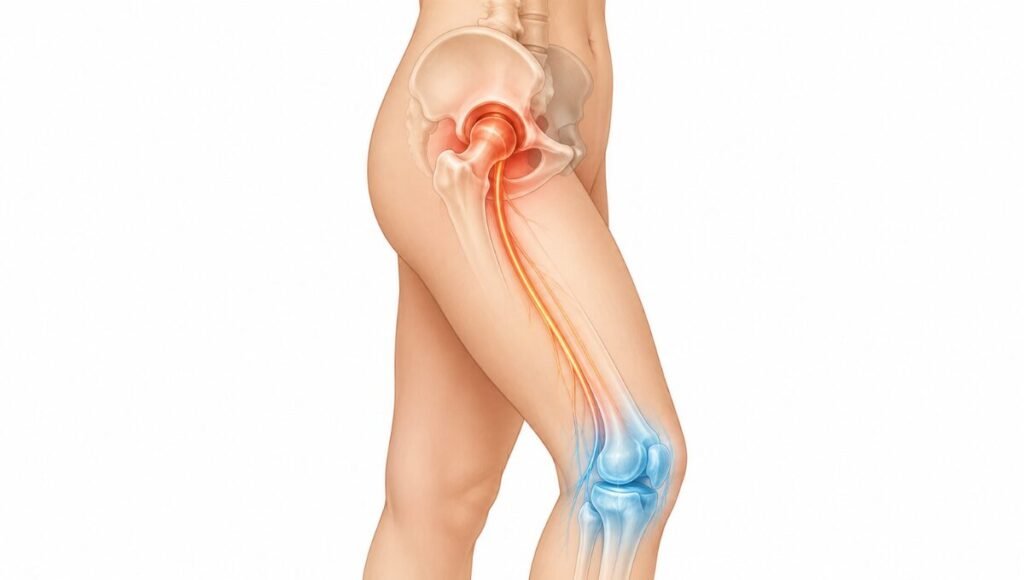
Here’s where it gets tricky. A case report published by the National Institutes of Health described a patient whose only symptom of severe hip arthritis was knee pain, with no hip discomfort at all. His knee X-rays kept coming back normal because the knee was never the problem. This happens because the femoral and obturator nerves serve both the hip and the knee, so your brain can genuinely misread which joint is sending the signal.
Cleveland Clinic rheumatologist Dr. Daniel Mazanec has explained that this “referred pain” pattern typically travels one direction: from the hip down to the knee, rather than the other way around. That’s a useful clue we’ll come back to shortly.
Read also: Best Creams for Arthritis Pain Relief: What Actually Works After 50
Understanding the Real Difference: What Our Readers Experience
Based on common experiences among adults over 50 who write to us, hip pain and knee pain tend to feel different once you know what to look for.
Hip pain usually shows up in the groin, the outer thigh, or the buttock. Many readers describe it as a deep ache that gets worse when getting out of a car, putting on socks, or rolling over in bed. It often limits how far you can rotate your leg.
Knee pain, on the other hand, is usually easier to point to directly. It tends to concentrate at the front, side, or back of the knee itself. Swelling, a grinding sensation, or a feeling of the knee “giving way” are common complaints that are specific to the knee joint.
Here’s the twist many people miss: hip problems frequently send pain down the front of the thigh, right into the knee. Knee problems almost never send pain up into the hip. So if your “knee pain” is vague, hard to pinpoint, and doesn’t line up with any specific injury, it’s worth asking whether your hip is actually the source.
Practical Ways to Tell Them Apart at Home
You don’t need a medical degree to start narrowing things down. Try these simple checks before your next appointment.
The rotation test. Sit down and try rotating your leg inward and outward from the hip. If that movement recreates your pain, even if you feel it in your knee, the hip is likely involved.
The location test. Place one finger exactly where the pain is worst. Groin or outer thigh pain points to the hip. Pain you can circle with one finger, right on the kneecap or joint line, points to the knee.
The activity test. Pain that worsens with stair climbing but eases with rest often suggests knee involvement. Pain that flares when standing up from a low chair or putting on shoes more often points to the hip.
The swelling check. Visible swelling, warmth, or a knee that feels “full” is a knee-specific sign. Hip joints sit too deep in the body to swell visibly in the same way.
None of these are a substitute for a proper diagnosis, but they can help you describe your symptoms more clearly to your doctor, which often speeds up getting the right answer.
What Experts Recommend
According to guidance commonly shared by orthopedic specialists, if you have persistent knee pain but your knee exam and imaging look normal, the next step should be a hip evaluation, particularly a check of hip rotation and an X-ray of the pelvis. This approach mirrors what researchers found in a study published in the medical journal PMC, where a group of patients with unresolved knee pain were ultimately diagnosed with hip arthritis, and most found real relief only after their hip was treated.
Mayo Clinic and other major health institutions generally recommend seeing a doctor when joint pain lasts more than a few weeks, limits your daily activities, or comes with swelling, warmth, or reduced range of motion. A physical exam of both joints, sometimes paired with imaging, is the most reliable way to find the true source.
In the meantime, low-impact movement, gentle strengthening of the muscles around the hip and knee, and maintaining a healthy weight are consistently recommended to reduce joint strain and ease symptoms while you pursue a diagnosis.
Conclusion
Sorting out hip pain vs. knee pain isn’t always straightforward, especially since the two joints are so closely connected that one can easily disguise the other. Paying attention to where the pain sits, what movements trigger it, and whether swelling is present can help you and your doctor get to the right diagnosis faster.
If your joint pain has been sticking around, don’t wait it out. A proper evaluation of both the hip and the knee is the surest way to find lasting relief and get back to moving comfortably.
Frequently Asked Questions
Can hip arthritis cause knee pain without any hip pain at all?
Yes. This is a well-documented pattern called referred pain, where irritation in the hip joint is felt entirely in the knee due to shared nerve pathways. It’s one of the most commonly missed causes of unexplained knee pain in adults over 50.
How do I know if my knee pain is coming from my hip?
Pay attention to whether rotating your leg from the hip reproduces the pain and whether the discomfort is vague and hard to pinpoint rather than centered directly on the knee joint. A doctor can confirm this with a hip exam and imaging.
Is it normal to have both hip pain and knee pain at the same time after 50?
It’s fairly common. Because the hip and knee work together as part of the same movement chain, a problem in one joint often places extra stress on the other, leading to overlapping symptoms, especially with osteoarthritis.
When should I see a doctor for hip or knee pain?
Reach out to a healthcare provider if pain lasts more than two to three weeks, disrupts sleep or daily tasks, comes with visible swelling, or doesn’t improve with rest and gentle activity modification.
Medical Disclaimer
This article is for informational purposes only and is not a substitute for professional medical advice, diagnosis, or treatment. Always consult a qualified healthcare provider regarding any joint pain or health condition. This post may contain affiliate links, and we may earn a commission at no extra cost to you if you make a purchase through them.

Lauren is the founder of PainFreeAfter50.com and a dedicated researcher in joint health and healthy aging. After developing chronic joint pain in her early 50s, she spent years reviewing clinical studies and testing natural approaches to find real solutions. Today she shares honest, evidence-based guidance to help adults over 50 manage pain, improve mobility, and reclaim their quality of life.