
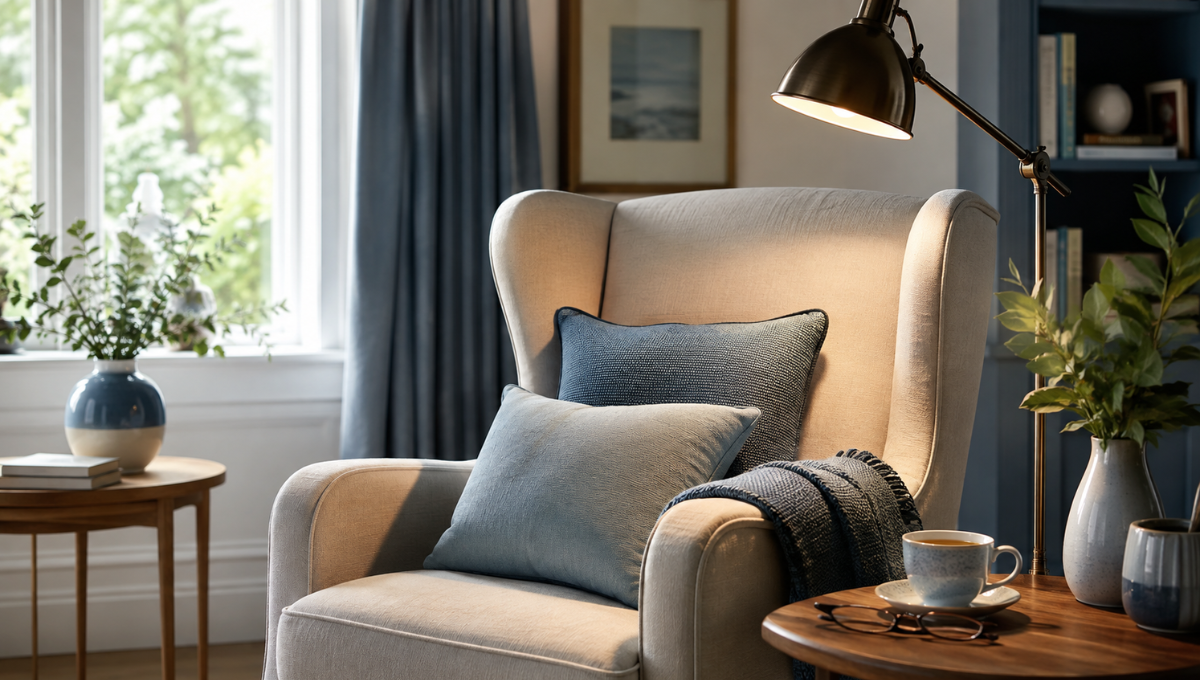
Learning how to create a relaxing reading corner starts with understanding that your body and mind both need the right environment to truly unwind.
A well-designed reading nook isn’t just about aesthetics; it’s about supporting your posture, protecting your eyesight, and giving your nervous system a genuine chance to rest. Whether you have a spacious sunroom or just a quiet corner of your bedroom, the right combination of seating, lighting, and small comforts can transform any space into a personal sanctuary for slowing down with a good book.
Why a Dedicated Reading Space Matters
Many people underestimate how much their surroundings influence their ability to relax. Environmental psychologists have long noted that clutter, harsh lighting, and uncomfortable seating can raise stress levels without us even realizing it. Reading is often recommended as a low-impact way to reduce mental tension, but if your body is fighting an uncomfortable chair or straining to see the page, the relaxation benefits are undermined before they even begin.
Research published by health organizations such as the Cleveland Clinic has highlighted that reading before bed can help calm the mind and prepare the body for sleep, provided the activity happens in a comfortable, low-stimulation setting. This is especially important for anyone managing joint stiffness, back discomfort, or eye fatigue, since the wrong setup can turn a peaceful pastime into a source of physical strain.
Choosing the Right Chair for Comfort and Support
The seat you choose is the foundation of any relaxing reading corner. Comfort matters, but so does proper support for your spine and hips, particularly if you plan to sit for extended periods.
Look for these features when selecting seating:
- Firm but cushioned support that doesn’t sink too deeply when you sit down
- Armrests at a height that lets your shoulders stay relaxed rather than hunched
- A chair height that allows your feet to rest flat on the floor
- Enough width to shift positions comfortably without feeling boxed in
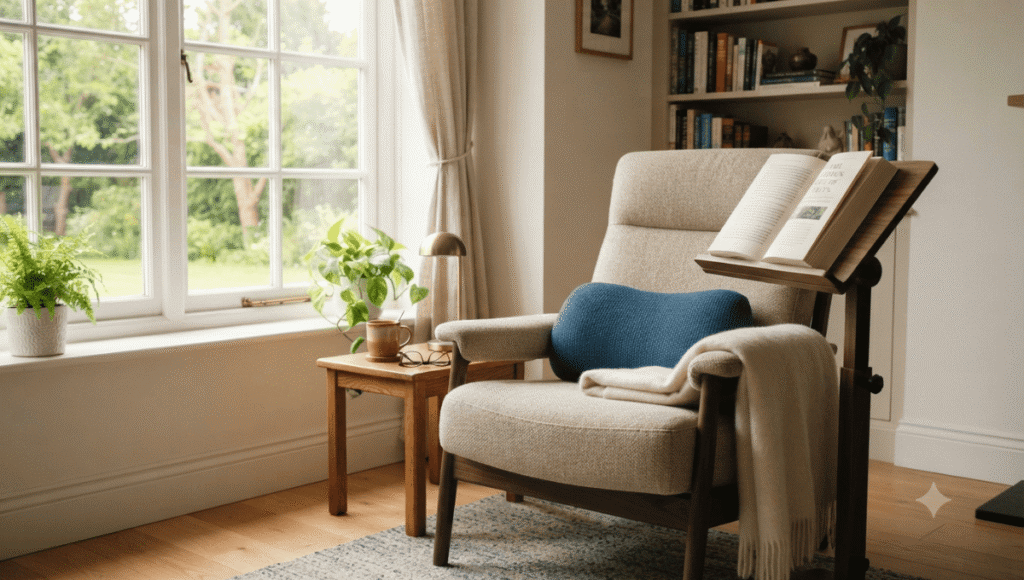
A high-backed armchair, a supportive recliner, or even a well-cushioned window seat can all work beautifully, as long as the piece encourages good posture rather than slouching. If you already deal with neck or shoulder tension, positioning a small lumbar cushion behind your lower back can make a noticeable difference during longer reading sessions.
How to Create a Relaxing Reading Corner: Lighting: The Most Overlooked Element
Lighting is one of the most important, and most frequently mismanaged, aspects of a reading corner. Poor lighting forces your eyes to work harder, which can lead to fatigue, headaches, and reduced focus over time. According to guidance frequently echoed by vision health experts, reading in dim light doesn’t permanently damage the eyes, but it does increase strain and discomfort, especially for those already managing presbyopia or other age-related vision changes.
For a well-lit reading nook, aim for:
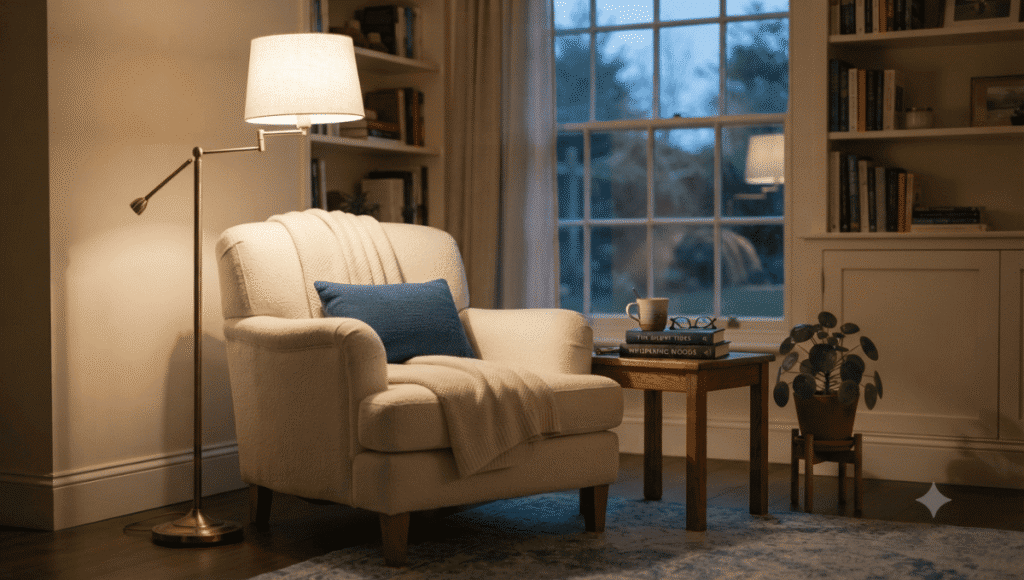
- A dedicated reading lamp positioned slightly behind or beside your shoulder, not directly overhead
- Warm, soft-white bulbs rather than harsh, cool-toned lighting
- Adjustable brightness so you can adapt to different times of day
- Natural light during daytime hours whenever possible, since sunlight exposure has also been associated with improved mood and alertness
A floor lamp with an adjustable arm is often the most practical choice, allowing you to direct light exactly where you need it without creating glare on the page.
Creating a Calming Atmosphere
Once seating and lighting are settled, the next layer is atmosphere. A relaxing reading corner should feel like a small retreat from the rest of the household’s activity.
Read also—you might like: How to Make Your Home Safer After 50
Consider incorporating:
- Soft textiles, such as a cozy throw blanket or textured cushions, to add warmth and tactile comfort
- A small side table within arm’s reach for a cup of tea, reading glasses, or your current book
- A neutral or muted color palette, since overly bright or busy patterns can feel visually stimulating rather than calming
- A touch of greenery, like a low-maintenance plant, which studies on biophilic design suggest can support feelings of calm and improved air quality
Sound matters too. If your home tends to be noisy, a pair of soft-close doors, a room divider, or even a small white-noise machine can help create the auditory calm that pairs so well with quiet reading time.
Protecting Your Eyes and Posture During Long Sessions
Even the best-designed reading corner won’t prevent discomfort if reading habits themselves aren’t mindful. Eye care professionals commonly recommend the practice of looking away from your page or screen every twenty minutes or so, focusing on something in the distance for about twenty seconds. This simple habit helps reduce the eye strain that can accumulate during longer reading sessions.
Posture matters just as much. Try to avoid reading with your neck bent sharply downward for extended periods, since this position can contribute to tension in the neck and upper back. A book stand or an adjustable reading pillow can help keep your material at a more neutral eye level, reducing strain on both your eyes and your spine.
A few additional habits that support comfort:
- Take short breaks to stretch your hands, wrists, and neck, especially if you enjoy holding a physical book for long stretches
- Keep a glass of water nearby, since staying hydrated supports overall alertness and comfort
- Position your reading corner away from drafts or direct heat sources to maintain a stable, comfortable temperature
Personalizing the Space to Make It Truly Yours
A reading corner becomes genuinely relaxing when it reflects your own preferences rather than a generic template. Some people find comfort in surrounding themselves with sentimental items, a favorite photograph, a handwoven blanket, or a small collection of books they return to again and again. Others prefer a minimalist approach, keeping the space clear of anything that isn’t directly related to the act of reading itself.
Scent can also play a subtle role in relaxation. A softly scented candle or a diffuser with calming essential oils, used in moderation and with attention to ventilation, can help signal to your brain that this space is meant for winding down. Just be mindful of any respiratory sensitivities before introducing new scents into a small space.
Finally, consider the time of day you’re most likely to use your reading corner. A space designed primarily for morning coffee and reading will benefit most from strong natural light, while an evening reading nook should prioritize warm, dimmable lighting that supports the body’s natural wind-down process before sleep.
Bringing It All Together
Creating a relaxing reading corner doesn’t require a large budget or a dedicated room. What it does require is thoughtful attention to the elements that most directly affect your comfort: supportive seating, well-positioned lighting, a calming atmosphere, and mindful reading habits that protect your eyes and posture.
When these pieces come together, even a small corner of your home can become a place you genuinely look forward to returning to, day after day.
By treating your reading space as an investment in both relaxation and physical well-being, you give yourself permission to slow down in a setting built specifically to support that pause, one comfortable, well-lit page at a time.
This article is for general informational purposes and is not a substitute for professional medical advice. If you experience persistent eye strain, neck pain, or discomfort while reading, consult a healthcare provider.

Lauren is the founder of PainFreeAfter50.com and a dedicated researcher in joint health and healthy aging. After developing chronic joint pain in her early 50s, she spent years reviewing clinical studies and testing natural approaches to find real solutions. Today she shares honest, evidence-based guidance to help adults over 50 manage pain, improve mobility, and reclaim their quality of life.


2 thoughts on “How to Create a Relaxing Reading Corner”