Stretching Routine for Stiff Joints Over 50. Do you wake up in the morning feeling like your body forgot how to move during the night? Know that you’re not alone. Joint stiffness is one of the most common complaints among adults over 50, and it can turn even simple tasks like getting out of bed or climbing stairs into a real challenge.
The good news? A consistent stretching routine for stiff joints can make a significant difference in how you feel every day. You don’t need a gym or sophisticated equipment. Just a few minutes, some space on the floor, and the right movements. Let’s explain what the science says, which stretches work best, and how to create a routine that really works.
What the Science Says About Stretching and Joint Health After 50
Stiffness after 50 isn’t just “getting old”; there are real biological reasons behind it. As we age, the cartilage between our joints gradually thins, the fluid that lubricates joints (called synovial fluid) decreases, and the connective tissue around muscles and tendons loses elasticity.
This is well-documented in research published in journals like the Journal of Aging and Physical Activity and supported by institutions like the National Institutes of Health (NIH).
The encouraging part is that research consistently shows stretching helps. A study cited by Harvard Health Publishing found that regular flexibility exercises can significantly reduce morning stiffness and improve range of motion in older adults, even those with mild osteoarthritis.
The Mayo Clinic also recommends daily stretching as a cornerstone of joint health management for people over 50, noting it helps maintain the range of motion needed for everyday activities.
Stretching also has a secondary benefit: it improves circulation to the joints, helping deliver nutrients and remove waste products that contribute to inflammation and pain.
Stretching Routine for Stiff Joints Over 50: The 7 Best Stretches for Stiff Joints Over 50
Many of our readers report that the biggest barrier to stretching isn’t motivation; it’s not knowing which stretches are actually safe and effective. Based on common experiences among adults 50+, we’ve put together seven gentle, proven movements that target the joints most affected by age-related stiffness: the knees, hips, shoulders, and lower back.
Do these slowly, breathe through each movement, and never push through sharp pain.
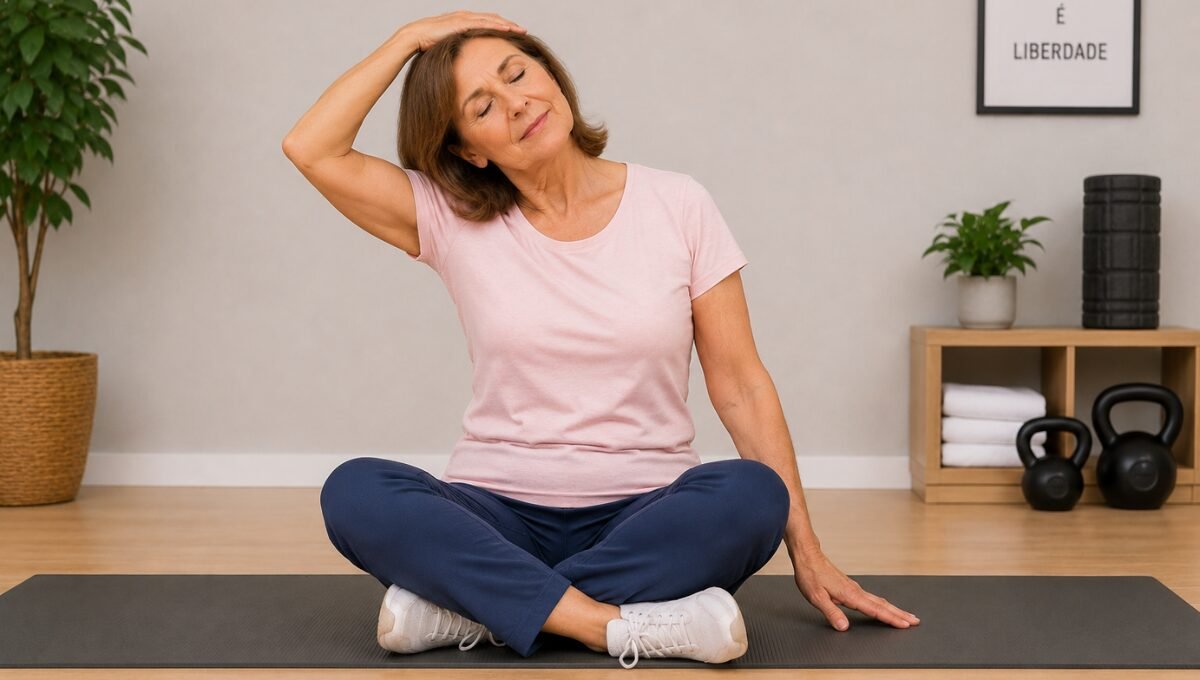
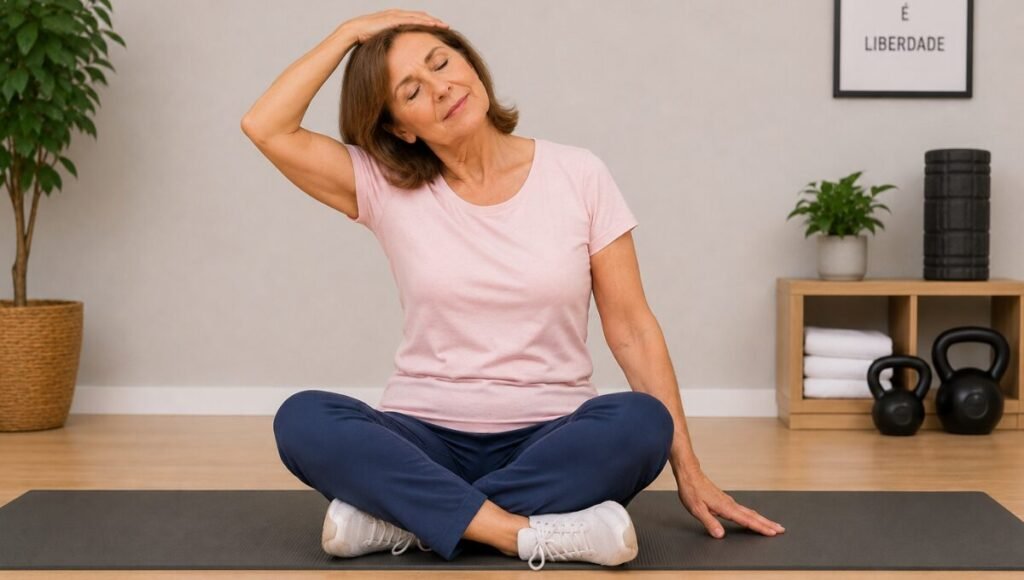
1. Neck Side Stretch
Targets: Cervical spine, upper trapezius
Sit upright in a chair. Slowly tilt your right ear toward your right shoulder until you feel a gentle pull on the left side of your neck. Hold for 20–30 seconds. Repeat on the other side. This relieves tension that builds up overnight and is especially helpful if you experience neck stiffness in the morning.
2. Shoulder Cross-Body Stretch
Targets: Shoulder joint, rotator cuff
Bring your right arm across your chest and use your left hand to gently press it closer to your body. Hold 20–30 seconds. Switch sides. Many people over 50 notice shoulder stiffness tied to reduced range of motion; this stretch directly addresses that.
3. Seated Hip Flexor Stretch
Targets: Hips, hip flexors, lower back
Sit on the edge of a sturdy chair. Slide your right foot back so your right knee is lower than your hip. Sit tall and gently lean forward slightly. You’ll feel a stretch in the front of your right hip. Hold for 20–30 seconds, then switch. Tight hip flexors are a leading cause of lower back pain in adults over 50.
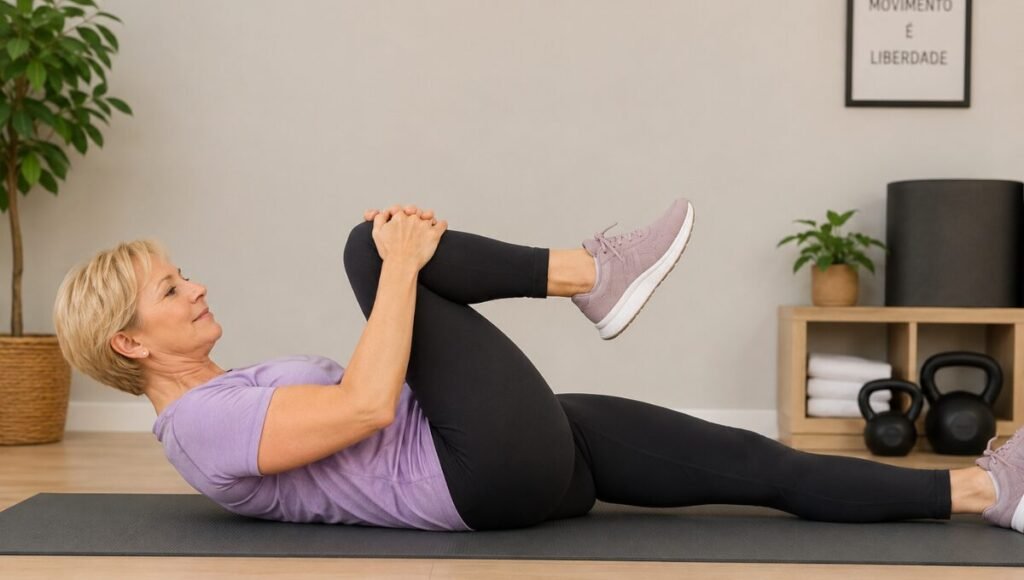
4. Knee-to-Chest Stretch
Targets: Lower back, hips, knees
Lie on your back on a mat or a firm surface. Pull one knee gently toward your chest, holding it with both hands. Hold for 20–30 seconds, then switch. This is one of the most recommended stretches for people with morning lower back stiffness or mild arthritis.
5. Calf Stretch (Standing)
Targets: Ankles, calves, Achilles tendon
Stand facing a wall, hands on the surface for balance. Step your right foot back about two feet. Keep your right heel on the floor and gently press your hips forward. Hold 20–30 seconds. Ankle and calf stiffness often goes unnoticed until it contributes to balance problems; this stretch keeps those joints mobile.
6. Figure-Four Hip Stretch
Targets: Hips, piriformis, glutes
Lie on your back. Cross your right ankle over your left knee (like the number 4). Gently press your right knee away from you, or pull your left thigh toward your chest for a deeper stretch. Hold 20–30 seconds. This is excellent for hip joint mobility and sciatic nerve relief.
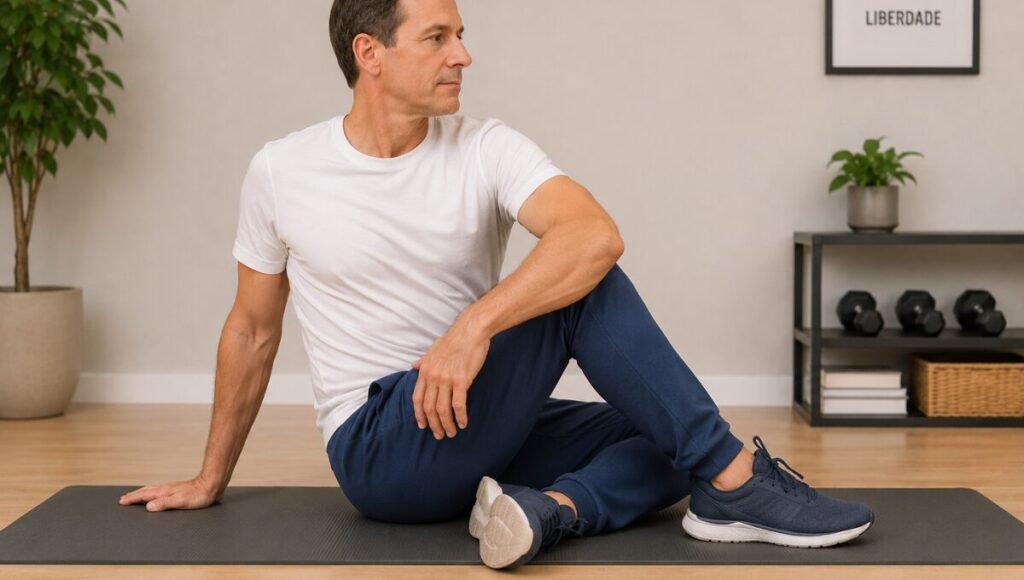
7. Thoracic Spine Rotation (Seated)
Targets: Mid-back, thoracic spine
Sit upright in a chair with feet flat on the floor. Cross your arms over your chest. Slowly rotate your upper body to the right as far as comfortable. Hold 5 seconds, return to center, then rotate left. Repeat 5 times per side. A stiff mid-back affects posture, balance, and how the rest of your joints feel. This one is a game changer.
Looking for additional support for your joints? Many of our readers combine their stretching routine with a quality joint supplement. For the highest-rated glucosamine and chondroitin supplement, check it out on Amazon. Always consult your doctor before starting any new supplement.
How to Build a Daily Stretching Routine That Sticks
Knowing the stretches is one thing. Actually, doing them every day is another thing. Based on common experiences among adults 50+, here are the practical strategies that make the biggest difference:
Do it first thing in the morning. Joint stiffness tends to be worse after a night of low activity. Stretching within 30 minutes of waking up even before your coffee can reset how your entire day feels. Keep a yoga mat beside your bed as a visual cue.
Start with just 10 minutes. You don’t need a 45-minute flexibility session to see results. Research from the American College of Sports Medicine supports the idea that even short, consistent bouts of stretching improve flexibility over time. Aim for 10–15 minutes daily rather than occasional longer sessions.
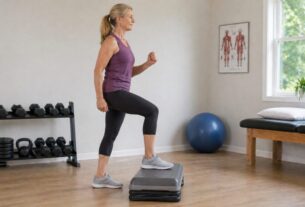
Warm up first. Never stretch cold muscles. Walk in place for 2–3 minutes, or take a warm shower before your routine. Warmth increases blood flow to joints and makes stretching both safer and more effective.
Track your progress. Many of our readers find it helpful to note which stretches felt tight at first and how that changes over weeks. Seeing improvement is a powerful motivator.
Be consistent, not intense. Stretching should never be painful. A gentle, sustained pull is what you’re aiming for. If something hurts sharply, stop immediately.
Foot and Ankle Pain After 50: What Is Normal and What’s Not
What Experts Recommend for Joint Flexibility Over 50
Leading health organizations agree that stretching is one of the safest and most effective tools for joint health in older adults.
The Mayo Clinic recommends holding each stretch for at least 30 seconds and performing flexibility exercises at least two to three times per week, though daily is ideal for people with chronic stiffness or arthritis.
The Arthritis Foundation specifically endorses gentle range-of-motion exercises (which include stretching) as a first-line, non-drug strategy for managing joint pain and maintaining independence. They note that people with arthritis who stretch regularly report less pain and greater ease with daily tasks.
Harvard Medical School’s health resources also point out that flexibility training helps maintain the muscle strength that protects joints, reducing the risk of falls and injuries, which become more consequential after 50.
If you have been diagnosed with osteoarthritis or rheumatoid arthritis or have had joint replacement surgery, always consult your doctor or a licensed physical therapist before starting any new stretching program. A physical therapist can personalize your routine and ensure you’re not aggravating existing conditions.
Natural Remedies for Joint Pain After 50
Start Your Stretching Routine for Stiff Joints Today
Stiff joints don’t have to define your mornings or limit your life. A simple, consistent stretching routine for stiff joints, done daily and done gently, can help you move more freely, feel less pain, and maintain the independence that matters so much after 50.
Start with just a few of the stretches above, build the habit, and give your body the time it needs to respond. Most of our readers who commit to even 10 minutes a day report feeling noticeably better within a few weeks.
Your joints have carried you a long way. Now it’s time to take care of them.
Want to support your flexibility from the inside out? Many adults over 50 find that pairing their stretching routine with a joint-supporting supplement makes a real difference. See it on Amazon. Top-Rated Collagen Supplement for Joint Health [As always, consult your healthcare provider first.]
Frequently Asked Questions
How long does it take to see results from a stretching routine for stiff joints?
Most people notice some improvement in morning stiffness within 2–4 weeks of daily stretching. Significant flexibility gains typically appear after 6–8 weeks of consistent practice. The key word is “consistent”; occasional stretching won’t produce lasting results.
Is stretching safe if I have arthritis or joint pain?
In most cases, yes, gentle stretching is actually recommended for arthritis. The Arthritis Foundation supports range-of-motion exercises as a primary strategy for managing arthritis symptoms. However, you should avoid stretching into pain and always check with your doctor or physical therapist if you have a specific diagnosis
What is the best time of day to stretch for stiff joints?
Morning is generally best for combating joint stiffness, since your body has been still all night. However, stretching after a light warm-up at any point in the day is beneficial. Some people find a second short session in the evening helps them sleep better and wake up with less stiffness.
Can stretching alone improve joint pain, or do I need other treatments?
Stretching is a powerful tool, but it works best as part of a broader approach. Many adults over 50 combine stretching with low-impact exercise (like walking or swimming), anti-inflammatory nutrition, and, in some cases, supplements or medications recommended by their doctor. [LINK: Best Supplements for Joint Pain After 50. A Complete Guide]
This article is for informational and educational purposes only and is not intended as medical advice. Always consult a qualified healthcare professional before beginning any new exercise program, especially if you have a pre-existing medical condition, joint injury, or chronic illness. Individual results may vary.

Lauren is the founder of PainFreeAfter50.com and a dedicated researcher in joint health and healthy aging. After developing chronic joint pain in her early 50s, she spent years reviewing clinical studies and testing natural approaches to find real solutions. Today she shares honest, evidence-based guidance to help adults over 50 manage pain, improve mobility, and reclaim their quality of life.